
Twin Comanche Fuel Management: Understanding the Four-Tank System

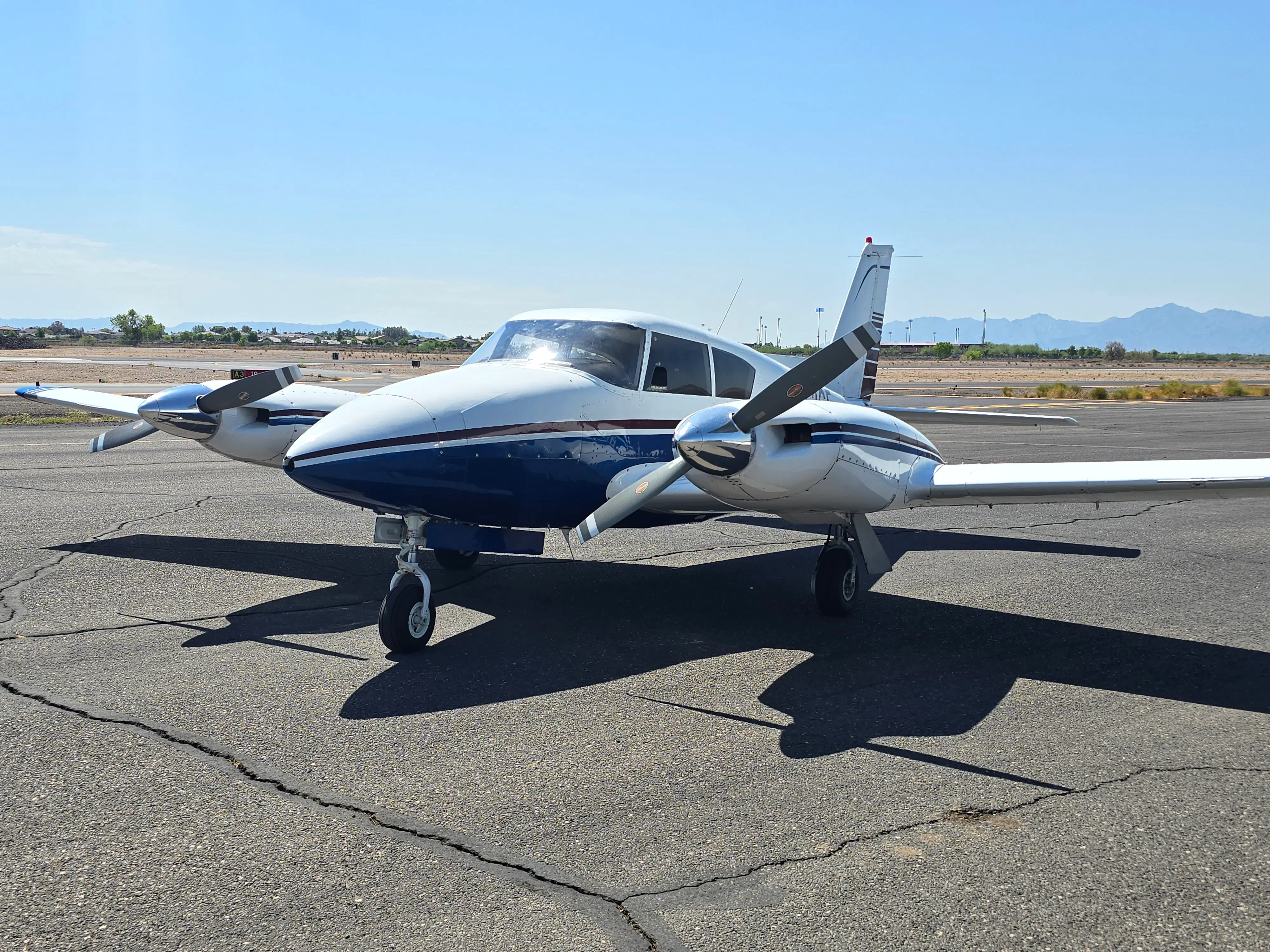
Stepping up into a multi-engine aircraft represents a significant milestone in any pilot’s career. It’s the moment where "system management" moves from a theoretical concept in a handbook to a demanding, real-time workload. In the Piper PA-30 Twin Comanche, nothing exemplifies this transition better than the fuel system. While a single-engine trainer usually offers a simple "Both," "Left," or "Right" selector, the Twin Comanche demands a more nuanced approach. With four individual fuel cells tucked into the leading edges of those wings, a pilot isn't just a navigator; they are a fuel manager.
The Twin Comanche is often praised for its efficiency, but that efficiency is earned through proactive management. When you’re sitting in the cockpit at Ace Pilot Academy, looking down at those fuel selectors on the floor between the seats, you’re looking at the lifeblood of your mission. Understanding the plumbing, the logic, and the technical limitations of this four-tank system is what separates a passenger with a certificate from a professional multi-engine pilot.
The Anatomy of the Four-Tank Layout
The standard PA-30 setup consists of four integral fuel cells. You have two main tanks and two auxiliary tanks. Each main tank holds 30 gallons, though it is critical to remember that only 27 gallons of that is usable fuel in each. The auxiliary tanks add another 15 gallons per side, bringing your total capacity to 90 gallons.
In a professional environment, we don't just think about "how much" fuel we have; we think about where that fuel is located and how it affects the aircraft's performance. The main tanks are located inboard, while the auxiliary tanks are situated further out in the wing. This distribution matters for lateral stability and wing loading. When you’re hand-flying a Twin Co at 160 MPH in cruise, the way that weight is distributed across the spar impacts the feel of the airplane.
Managing these four tanks requires a disciplined "eyes outside" approach. While you’ll be checking your gauges regularly, the physical act of switching tanks is a tactile, manual process. There are no automated transfer pumps or computer-managed balancing systems here. It is just you, the selectors, and your flight timer.

Strategic Fuel Flow: The Professional Sequence
In the world of multi-engine performance and limitations, fuel management starts before the engines even cough to life. The standard operating procedure in the Twin Comanche is to perform all ground operations, takeoffs, and climbs on the main tanks. The reasoning is technical and safety-oriented: the main tanks are positioned to provide the most reliable fuel flow during high-deck-angle climbs and maneuvers.
Once you’ve reached your cruise altitude and leveled off, the mindset shifts to long-range management. This is where we transition to the auxiliary tanks. Professional pilots prefer to "burn the auxes" first during cruise. Why? Because if you encounter a fuel feed issue or a pump failure, you want your most reliable and largest fuel source: the mains: to be full and ready for the descent and landing phases.
Switching to the auxiliary tanks isn't a "set it and forget it" task. It requires a specific sequence: electric boost pumps on, select auxiliary, monitor fuel pressure, and once stabilized, boost pumps off. If you’re pushing the aircraft's range, you are constantly calculating your burn rates. If the Twin Comanche is sipping 15 to 17 gallons per hour total, those auxiliary tanks provide roughly two hours of flight time. You need to be ahead of the airplane, knowing exactly when you’ll be switching back to the mains before the engines give you the first hint of a stumble.
Mastering the Crossfeed System
The most technically demanding part of the PA-30 fuel system is the crossfeed. It is a system designed for the "worst-case scenario," but mastering it is a requirement for multi-engine fuel x-feed systems proficiency.
In a standard configuration, each engine draws from the tanks on its respective side. The left engine drinks from the left main or left aux; the right engine does the same on the right. However, if you lose an engine, you suddenly have a lopsided situation. You have an operating engine on one side and a significant amount of fuel trapped in the tanks on the "dead" side.
The crossfeed system allows the operating engine to draw fuel from the opposite side’s tanks. It’s a brilliant piece of engineering, but it requires a solid understanding of the plumbing to use safely. The correct setup is straightforward: first, set the fuel selector of the operative engine to "CROSSFEED." Then set the fuel selector of the inoperative engine to either "MAIN" or "AUX," depending on which tank you want to draw from.
In practical terms, that lets the good engine access the dead engine’s fuel supply. That matters for two reasons: it can extend range in an OEI situation, and it can help manage lateral balance as fuel is burned from the inoperative side. This is where many students experience "textbook fatigue," but the logic is simple: you are routing usable fuel from the dead side to the engine that is still producing thrust. However, there is a catch. You cannot crossfeed from a tank to an engine on the same side while simultaneously crossfeeding to the other. It is an "either-or" logic. In an OEI (One Engine Inoperative) situation, managing this correctly is vital for maintaining your multi-engine service ceiling and ensuring you have the range to reach a suitable airport.
Handling the Hardware: Pumps and Selectors
The Twin Comanche relies on a combination of engine-driven fuel pumps and electric auxiliary (boost) pumps. In a career-pilot mindset, you treat the electric pumps as your primary backup and your procedural safety net. We use them for takeoff, landing, and any time we are switching tanks.
The fuel selectors themselves are located on the floor. In an era of glass cockpits and touchscreens, the PA-30 reminds us that flying is a physical discipline. You have to reach down, feel the detent, and visually confirm the position. This "manual management" is actually a benefit for situational awareness. When you physically move a lever, it reinforces the mental model of what the fuel is doing.
During your multi-engine training series, you’ll practice the "touch and identify" method. Before moving a selector, you touch it, state the current position, state the intended position, and then move it. This prevents the nightmare scenario of accidentally turning a fuel selector to "OFF" when you intended to switch to "CROSSFEED": a mistake that can turn a routine training flight into a real-world emergency very quickly.
The Checkride Perspective: What the DPE Expects
When you sit down for your multi-engine checkride, the Designated Pilot Examiner (DPE) isn't just looking for you to recite the tank capacities. They are looking for "systems knowledge integration." They might ask: "We are level at 8,000 feet, drawing from the aux tanks, and the right engine-driven pump fails. What is your immediate action?"
The answer isn't just "turn on the boost pump." It’s a comprehensive understanding of how the forces acting on an aircraft change when you’re managing a system failure. They want to see that you understand the "why" behind the "how." They want to see that you can manage the fuel system without burying your head in the cockpit.
Keeping your "eyes outside" is paramount. In the Twin Comanche, you should be able to operate the fuel selectors by feel while maintaining your heading and altitude. If you have to stare at the floor for ten seconds to find the selector, you’re losing the battle with the airplane. This is why we emphasize cockpit familiarization until the layout is burned into your muscle memory.

Proactive Management vs. Reactive Flying
The four-tank system in the Twin Comanche is a tool for the proactive pilot. It offers incredible range and flexibility, but it demands respect. A career-oriented pilot doesn't wait for the fuel pressure needle to flicker before deciding which tank to use next. They are constantly calculating. They know their groundspeed, they know their burn, and they know exactly how many gallons are sitting in each of those four cells at any given moment.
This level of detail is what we teach at Ace Pilot Academy. Whether you’re learning about zero side slip or the nuances of critical engine aerodynamics, the underlying theme is always the same: mastery of the machine.
Fuel management in the PA-30 is a microcosm of professional multi-engine flying. It’s about logic, discipline, and the ability to stay ahead of the power curve. When you can balance those four tanks while maintaining 160 MPH on a cross-country, you aren't just flying a plane: you’re commanding a complex system. And that is exactly what the industry expects from a multi-engine pilot.

Comments