
Engine Out: The Critical Seconds of Emergency Site Selection

The transition from a routine cross-country flight to an emergency descent happens in a heartbeat. When the steady hum of the engine is replaced by a jarring silence or the rhythmic vibration of a mechanical failure, the clock starts ticking. For a pilot, these are the critical seconds where the difference between a survivable outcome and a bad one lies in the ability to manage risk and make decisions under pressure.
In the real world, emergency site selection is not about reciting standards. It is about rapidly answering one question: where can this airplane be landed with the best chance of everyone walking away? That means managing the airplane first, then making practical decisions about airports, fields, roads, wind, obstacles, terrain, and how much maneuvering room is actually available.
The Immediate Transition: Aviate Above All
The moment an engine failure is recognized, the pilot’s primary responsibility is to maintain control of the aircraft. This sounds fundamental, yet history shows that many emergency landings fail before the aircraft even reaches the ground because the pilot allowed the airspeed to decay.
The first step in your risk assessment is establishing and maintaining the best glide airspeed (Vg). This specific speed provides the most favorable lift-to-drag ratio, allowing the aircraft to cover the greatest horizontal distance for every foot of altitude lost. Understanding the forces acting on an aircraft becomes a survival skill in this moment. If you are too fast, you bleed off altitude unnecessarily; if you are too slow, you risk a stall or spin at an altitude where recovery is impossible.
Once Vg is trimmed and stable, you have effectively bought yourself the maximum amount of time available. Time is your most precious resource for evaluating the terrain below.
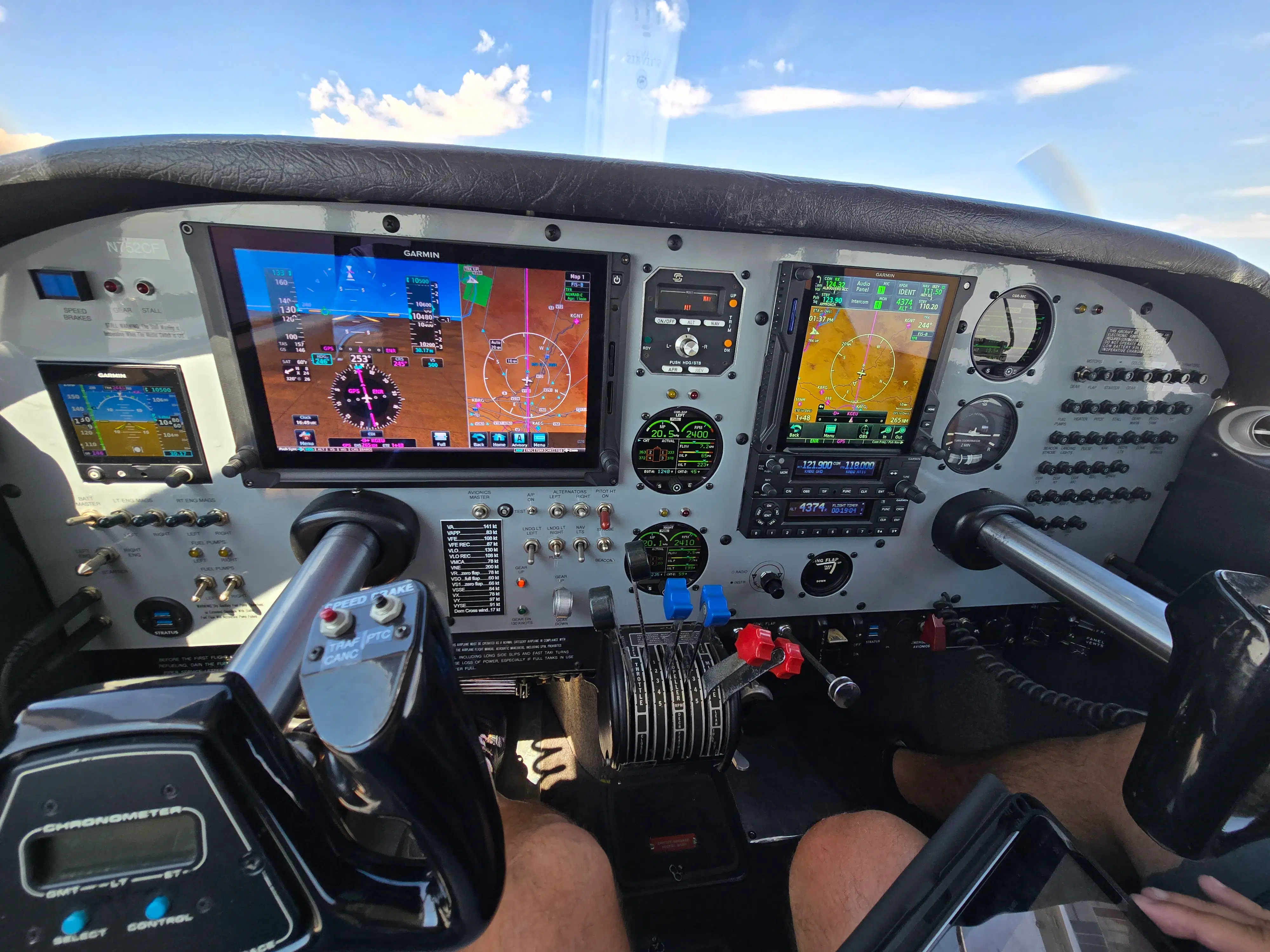
Evaluating the Terrain: The Hierarchy of Landing Sites
Selecting a landing site is a process of elimination. The pilot is not looking for a perfect option. The pilot is looking for the option that offers the highest margin for survival from the altitude available, with the least complexity in the final seconds.
Airports First, If They Are Realistic
If an airport is clearly within glide range, it usually wins. It offers a known surface, known alignment, fewer unknown obstacles, and emergency response if the landing is successful. The key word is clearly. A runway that might be reachable with a perfect glide, a perfect turn, and no sink is often not a real option. Chasing an airport until the airplane is too low to reach anything else is a common trap.
A practical decision-making flow is simple:
Can the runway be reached without stretching the glide?
Is there enough altitude to maneuver into position without aggressive turns?
Will wind, drag, or terrain make the airport less realistic than it looks?
If the answer is uncertain, the safer move is often to commit early to an off-airport site that is definitely reachable.
Fields vs. Roads
When an airport is not available, fields are often the better choice. Roads look attractive from the cockpit because they are long and linear, but they come with wires, poles, traffic, signs, medians, bridges, and unpredictable vehicles. A road can turn from usable to impossible very quickly as the airplane gets lower.
A field removes many of those collision hazards. The pilot still has to assess slope, crop height, furrows, ditches, rocks, and livestock, but a field usually gives more lateral space and more freedom to land into the wind. In most cases, a controlled touchdown in a field at the lowest possible speed is a better risk decision than trying to thread an airplane between moving cars and roadside obstacles.
Surface, Shape, and Approach Path
The best-looking surface is not always the best landing site. The pilot should evaluate three things together:
Approach path: Are there wires, trees, towers, or rising terrain on short final?
Site shape: Is the area long enough and wide enough to handle alignment errors or drift?
Surface energy: Will the surface help slow the airplane, or is there a chance of a sudden stop, gear collapse, or rollover?
A pilot should not reject a field just because the surface is rough, soft, or uneven. A field may damage the airplane or even create a rollover risk, but that is often still a better outcome than hitting cars, poles, or power lines on a road. The goal is not to find a surface that guarantees no damage. The goal is to choose the site that offers the best chance of avoiding unsurvivable impact forces and major obstacles.
A rough field with a clear, stable approach may be a better choice than a smooth road with wires. A pasture may be better than a plowed field. A dirt road may be better than a highway. The decision depends on what can actually be flown safely from the current position, not what looks best at first glance.
Dense Vegetation and Marginal Options
If a flat, clear field is not available, the risk assessment changes again. Dense vegetation, brush, or crops may absorb energy better than hard obstacles or traffic corridors. The goal is still the same: keep the airplane under control, arrive as slowly as possible, and avoid sudden deceleration caused by ditches, embankments, or objects that can snag a gear leg or wing.
When evaluating terrain, the approach path is often more important than the touchdown surface itself. An unobstructed approach gives the pilot a better chance to stabilize the descent, manage energy, and use ground effect to reduce impact forces before touchdown.
Risk Management and the Professional Mindset
Good emergency decision-making is not abstract. It is a sequence of practical judgments made with limited time and incomplete information. The pilot has to manage risk in layers.
First, preserve controllability. Second, protect glide range. Third, identify the best landing option that is definitely achievable. Fourth, commit early enough to fly a stable approach.
That process sounds simple, but the pressure is real. A pilot may be tempted to keep troubleshooting too long, stretch for a runway that is fading out of reach, or force a road landing because it looks familiar. Those are risk management failures, not stick-and-rudder failures.
A practical cockpit scan under pressure looks more like this:
What sites are reachable right now?
Which option has the fewest obstacles on the approach?
Which option allows the lowest ground speed at touchdown?
What choice leaves the most margin if the glide gets worse than expected?
Wind matters. So does slope. So does sun angle. So does the fact that objects that are easy to miss from 2,000 feet AGL become major hazards at 200 feet. The pilot should not fixate on the touchdown point alone. The entire arrival matters: the path to the site, the energy on arrival, and the chance of hitting something before the airplane ever reaches the surface.
Professionalism in the cockpit means accepting the reality of the situation immediately. If the engine is not coming back quickly, the focus shifts to landing the airplane under control in the best available place. Once a site is selected, the pilot should stay with that plan unless a clearly better option appears early enough to change without rushing. Changing from one field to another late in the descent often creates a low-altitude overshoot, steep turn, or stall-spin setup.

Multi-Engine Considerations: The Complexity of Choice
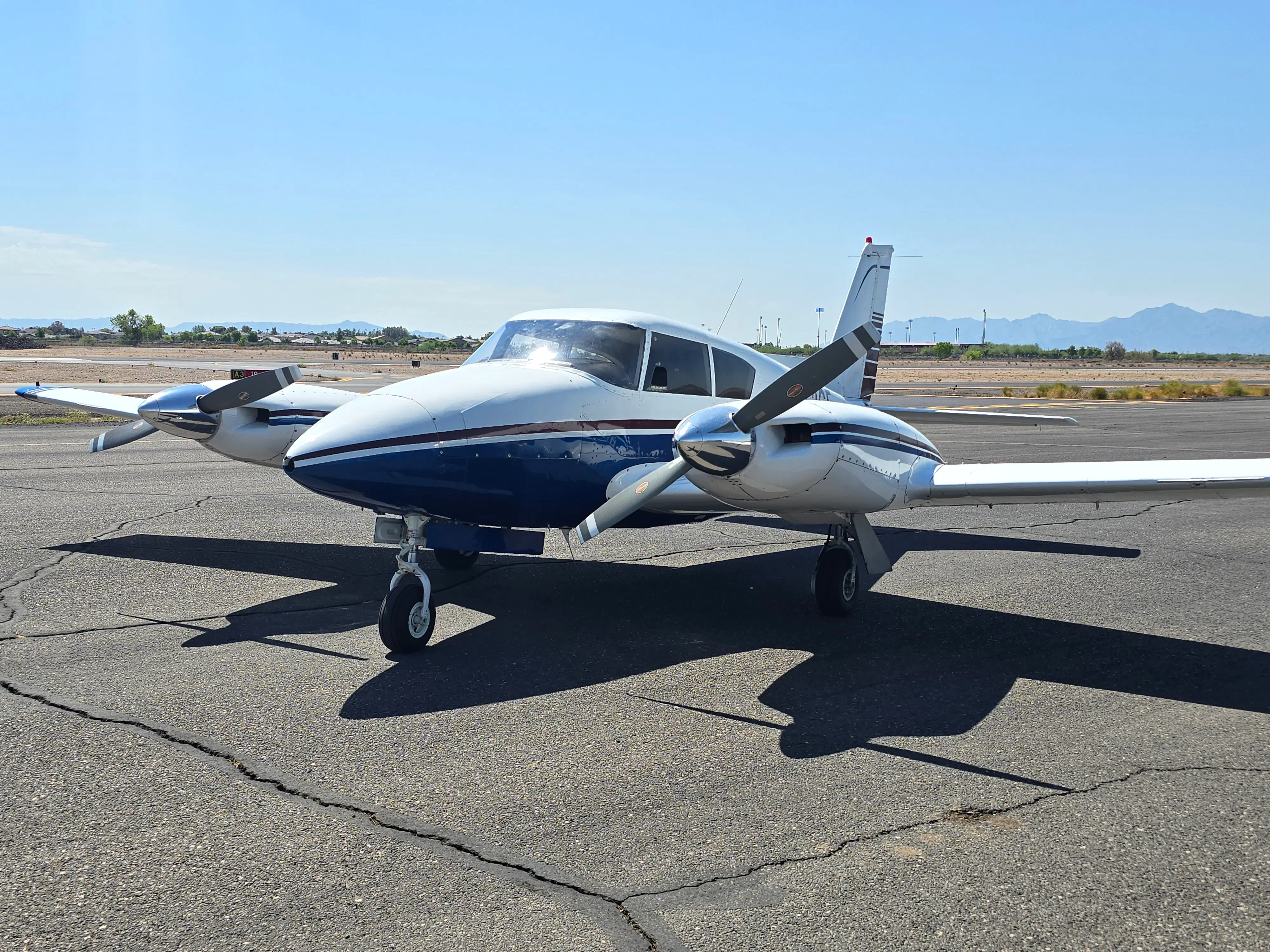
In a multi-engine aircraft, such as the Piper PA-30 Twin Comanche, an engine failure doesn't always necessitate an immediate off-field landing. However, it introduces a complex layer of risk assessment involving multi-engine performance and limitations.
If an engine fails and the aircraft is below its multi-engine service ceiling or facing a high critical density altitude, you may find yourself unable to maintain altitude. In this scenario, you are essentially flying a very heavy glider with high drag.
The pilot must quickly determine if single-engine climb performance is possible. If not, the decision to land must be made while you still have enough altitude to maneuver. This involves managing the me-critical engine and maintaining a zero side slip condition to maximize what little performance remains. If the aircraft cannot maintain altitude, the "drift down" becomes your emergency descent, and the same rules of site selection apply.
The Final Seconds: Execute with Precision
As the airplane gets lower, the decision window closes. At that point, the job is no longer to keep searching for better options. The job is to fly the chosen option well.
During the final moments:
Stay committed: Do not try to salvage a marginal runway or switch to a different field late unless the original site becomes clearly unusable.
Manage energy: Use flaps as necessary to steepen the descent and reduce touchdown speed, but only when the landing is assured.
Use the wind when possible: A headwind lowers ground speed and reduces impact energy, but only if using it does not require an unstable approach or dangerous maneuvering.
Protect the cabin: Before touchdown, ensure seatbelts are tight and secure loose items. Door position should be based on the manufacturer’s recommendation in the POH, not cockpit folklore. Some pilots suggest cracking the door before touchdown, but certain aircraft, including some Pipers, may recommend keeping it closed for structural integrity or occupant protection. Fuel and master switch actions should also follow the applicable checklist and aircraft guidance to reduce fire risk.
A survivable off-airport landing usually comes from disciplined control, realistic site selection, and an early commitment to a workable plan. It rarely comes from trying to force the perfect outcome after the good options are already gone.
Conclusion: Training for the Unexpected
Emergency site selection is a skill built through repetition, visualization, and honest scenario-based thinking. It is not just about memorizing glide speeds or satisfying a training standard. It is about learning to make a solid decision fast when the airplane is descending and the options are narrowing.
Pilots should look outside early, evaluate the real landing picture, and think in terms of survivability. The objective is the same: make disciplined decisions, protect controllability, and choose the landing site that gives the best real-world outcome.
The silence of an engine failure is a call to act, not hesitate. Fly the airplane, evaluate what is actually reachable, commit to the best option, and execute. That is what risk management looks like when it matters most.

Comments