
The Transition: Navigating the Single-to-Multi Performance Curve
- Jeff Gerencser
- Apr 10
- 5 min read

Moving from a single-engine aircraft to a twin is the most significant leap a pilot takes on the road to a professional career. For most, the transition is more than just adding a second throttle and a blue lever; it is a total recalibration of how you perceive aircraft performance. In a single-engine plane, an engine failure is an emergency that results in a landing. In a multi-engine aircraft, an engine failure is a performance problem that requires precise management to maintain flight.
This shift in mindset: from "where am I going to land?" to "how do I keep this climbing?": is known as the performance curve transition. Navigating this curve successfully is the difference between being a passenger in a crisis and being a pilot in command.
First things first: The Multi-Engine Mindset
In your initial Flight Training, you learned that more power equals more performance. While that is true when both engines are humming, the multi-engine world introduces a paradox: losing 50% of your power results in losing roughly 80% to 90% of your performance.
This happens because the remaining engine must now overcome the drag of the dead engine, the windmilling propeller, and the aerodynamic costs of the control deflections required to keep the airplane straight. This is why the multi-engine rating focuses so heavily on weight and balance, density altitude, and precise airspeed control. You are no longer flying an airplane with a safety net; you are flying an airplane that requires active performance management to stay above the terrain.
Mastering the Performance Curve
The "performance curve" in a multi-engine aircraft refers to the relationship between airspeed and the ability to maintain or gain altitude when one engine is inoperative (OEI). Unlike a single-engine plane, where the curve is relatively linear, a twin has a "deadly" side of the curve where the aircraft is physically unable to maintain flight.
Understanding multi-engine performance and limitations is critical. On a hot day at high density altitude, your "climb" might actually be a "controlled descent." This is why self-directed learners must dive deep into the POH (Pilot’s Operating Handbook) before they even step into the cockpit. You need to know your multi-engine service ceiling and how it changes based on the environment.
The PA-30 Twin Comanche: Your Training Platform
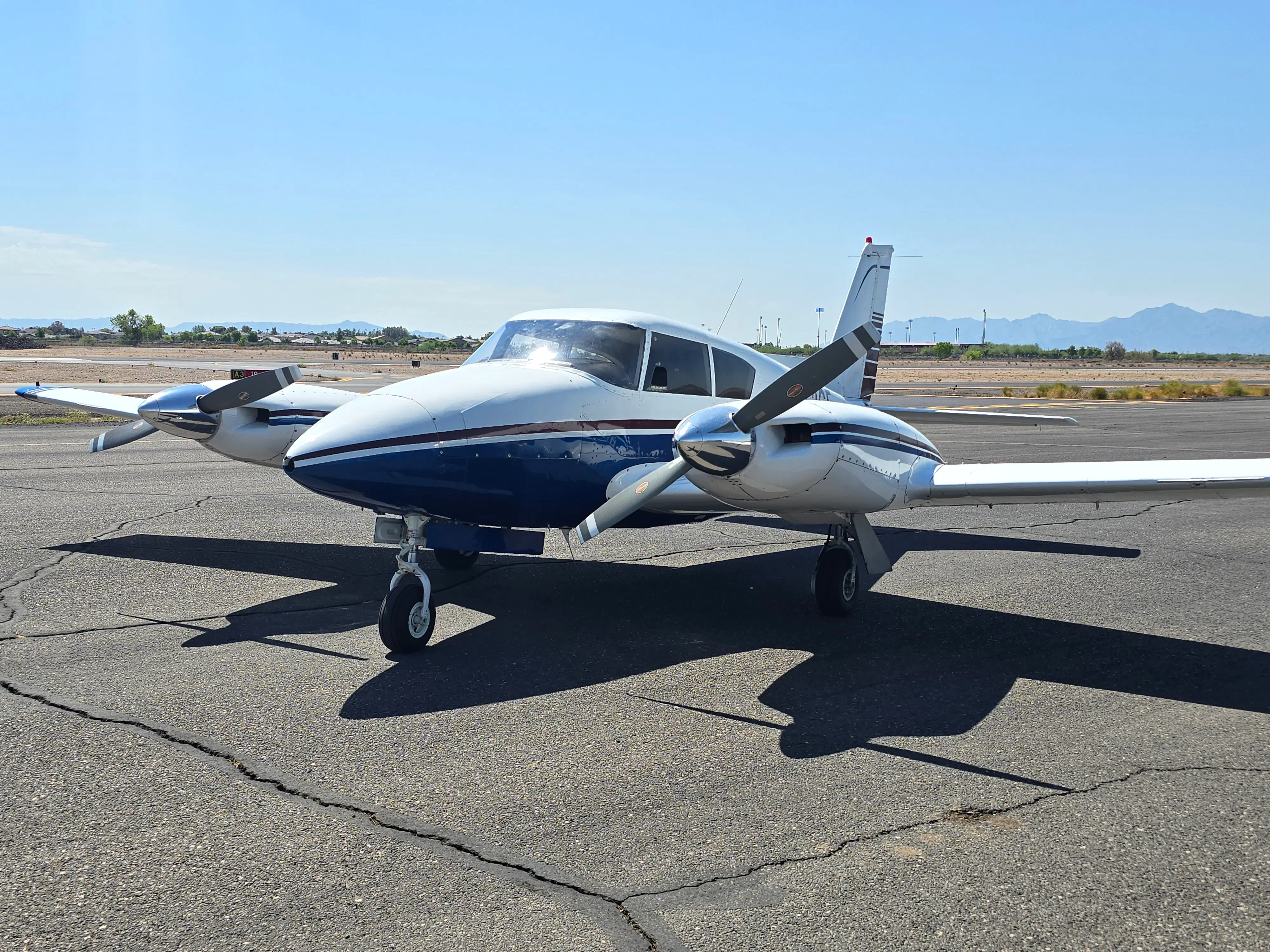
At Ace Pilot Academy, we utilize the PA-30 Twin Comanche as our primary training platform. Why? Because it is one of the most efficient and honest multi-engine trainers ever built. The "Twinkie" doesn't hide your mistakes; it highlights them in a way that makes you a better pilot.
The PA-30 is a high-performance twin that teaches you the importance of multi-engine propeller systems and the nuances of complex fuel management. It’s light enough to be nimble but powerful enough to give you a true taste of commercial-level operations. When you master the Twin Comanche, you aren't just getting a rating; you're gaining the skill set required to handle heavier metal at the airlines.
V-Speeds: The Language of Multi-Engine Flight
If you’re pursuing a multi-engine rating, your vocabulary is about to expand. You already know Vx and Vy, but now you have to master the "red line" and the "blue line."
Vmc (Minimum Controllable Airspeed): This is the red line. It’s the speed below which the rudder can no longer overcome the yawing moment of the operating engine. If you slow down below Vmc with the critical engine failed, the plane will roll. Mastering me-vmc is the core of your checkride preparation.
Vyse (Best Rate of Climb OEI): This is the blue line. In an engine-out scenario, this is your target. Anything faster or slower results in a loss of climb performance.
Vsse (Intentional One-Engine Inoperative Speed): This is the safety speed. We don't pull engines below this speed during training to ensure we stay on the safe side of the curve.
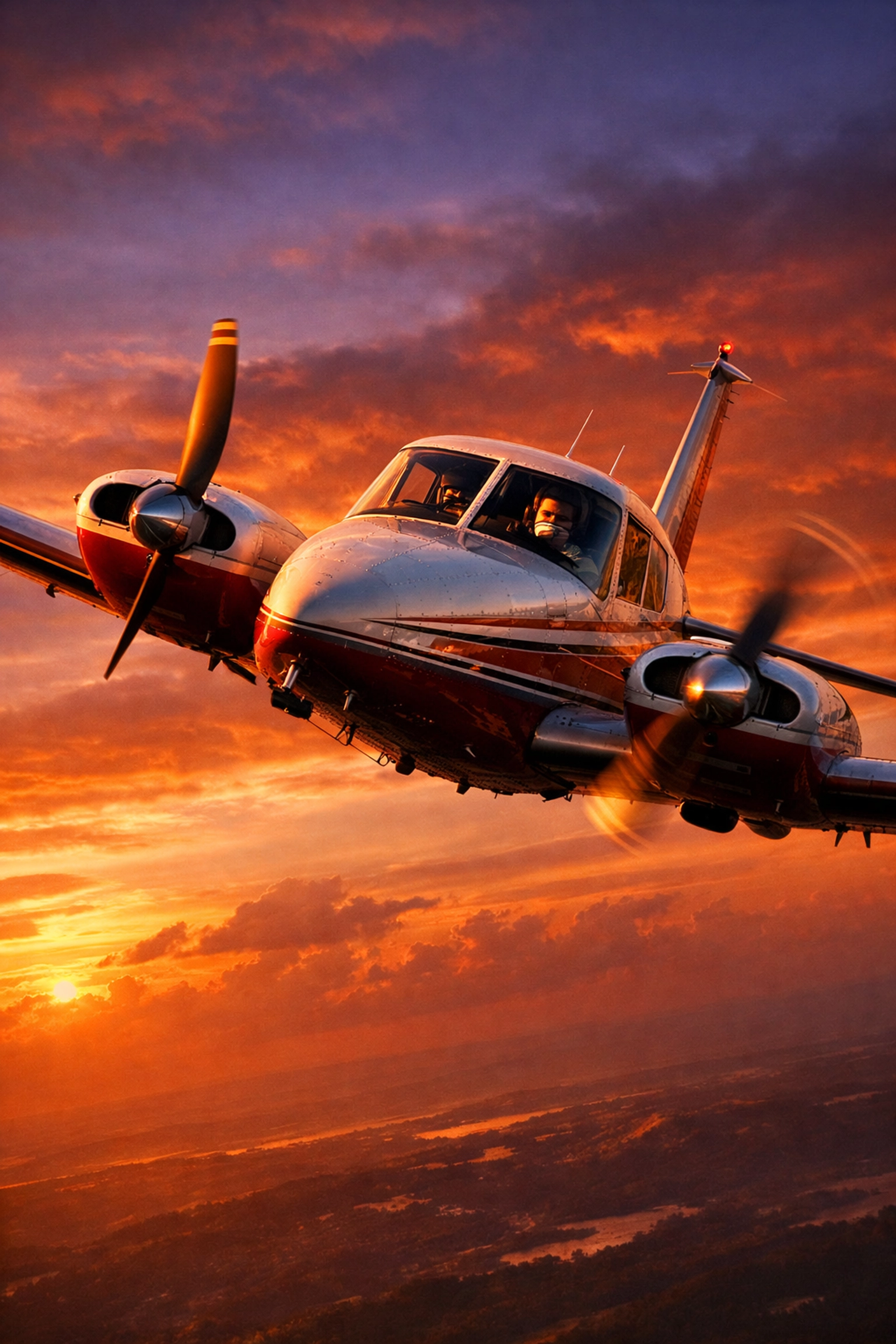
Understanding these multi-engine v-speeds is not just about memorizing numbers for a DPE; it’s about knowing exactly where your aircraft sits on the performance curve at any given second.
Critical Engines and Control
Most light twins suffer from the "critical engine" factor. Due to P-factor, spiraling slipstream, and torque, the failure of the left engine is typically more detrimental to control than the failure of the right engine.
As a commercial pilot candidate, you need to understand why the me-critical-engine matters and how to compensate using the zero side slip technique. By banking slightly (2-3 degrees) into the operative engine and using enough rudder to center the transition, you minimize drag and maximize what little performance you have left.
Systems Complexity: Moving Beyond the Basics
In a single, you likely had one fuel pump, one alternator, and one heater. In a twin, you are now a systems manager.
Fuel Cross-Feed: Learning multi-engine fuel x-feed systems is vital for balancing the aircraft and extending your range during an OEI event.
Heaters and Environmental: Many twins, including the PA-30, utilize a multi-engine combustion heater. This is a separate system that requires its own set of safety protocols.
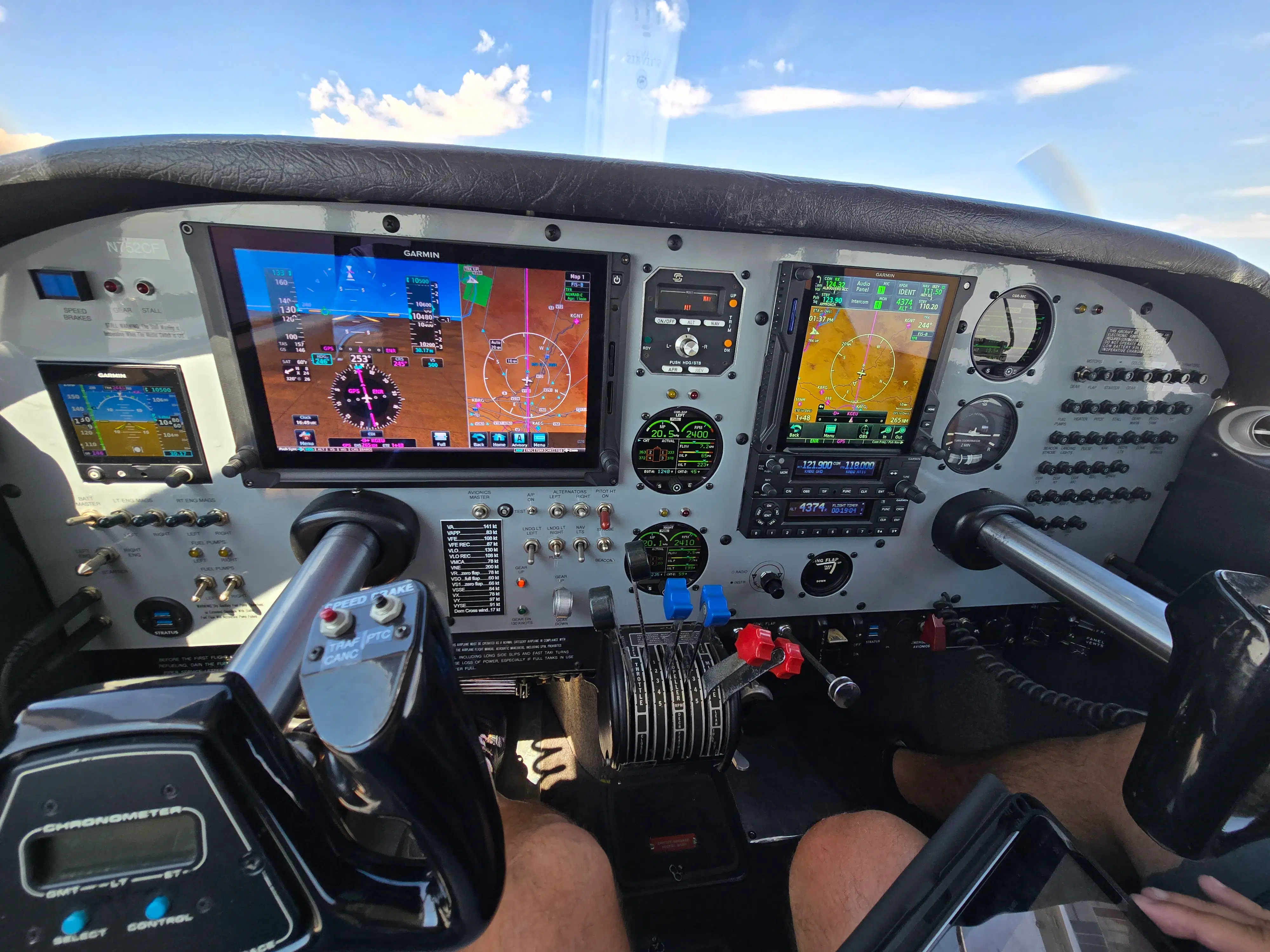
Avionics: Modern training requires modern tools. Our PA-30 features a G1000 glass cockpit, allowing you to bridge the gap between general aviation and the flight decks of regional jets.
Accelerated Flight Training: The Path to Proficiency
The transition to multi-engine flight is best handled through accelerated flight training. Why? Because multi-engine flying is all about muscle memory and procedural consistency. When you fly every day, the flow of "Identify, Verify, Feather, Secure" becomes second nature.
Taking one lesson a week in a twin is a recipe for frustration. The performance curve is too steep to climb with inconsistent training. By immersing yourself in an accelerated program, you stay ahead of the airplane and the curriculum. You learn to handle the forces acting on an aircraft in real-time, preparing you for the high-pressure environment of a commercial checkride.
Checkride Success: What the ACS Expects
The Airman Certification Standards (ACS) for the multi-engine rating are rigorous. The DPE isn't looking for "okay" flying; they are looking for professional-grade command. You must demonstrate:
Immediate and correct reaction to simulated engine failures.
Precise airspeed Gallatin within +5/-0 knots on Vyse.
The ability to manage multi-engine performance and limitations while navigating or performing approaches.
The goal isn't just to pass; it's to prove that you can safely operate a complex machine when things go wrong.
Navigating the Learning Curve
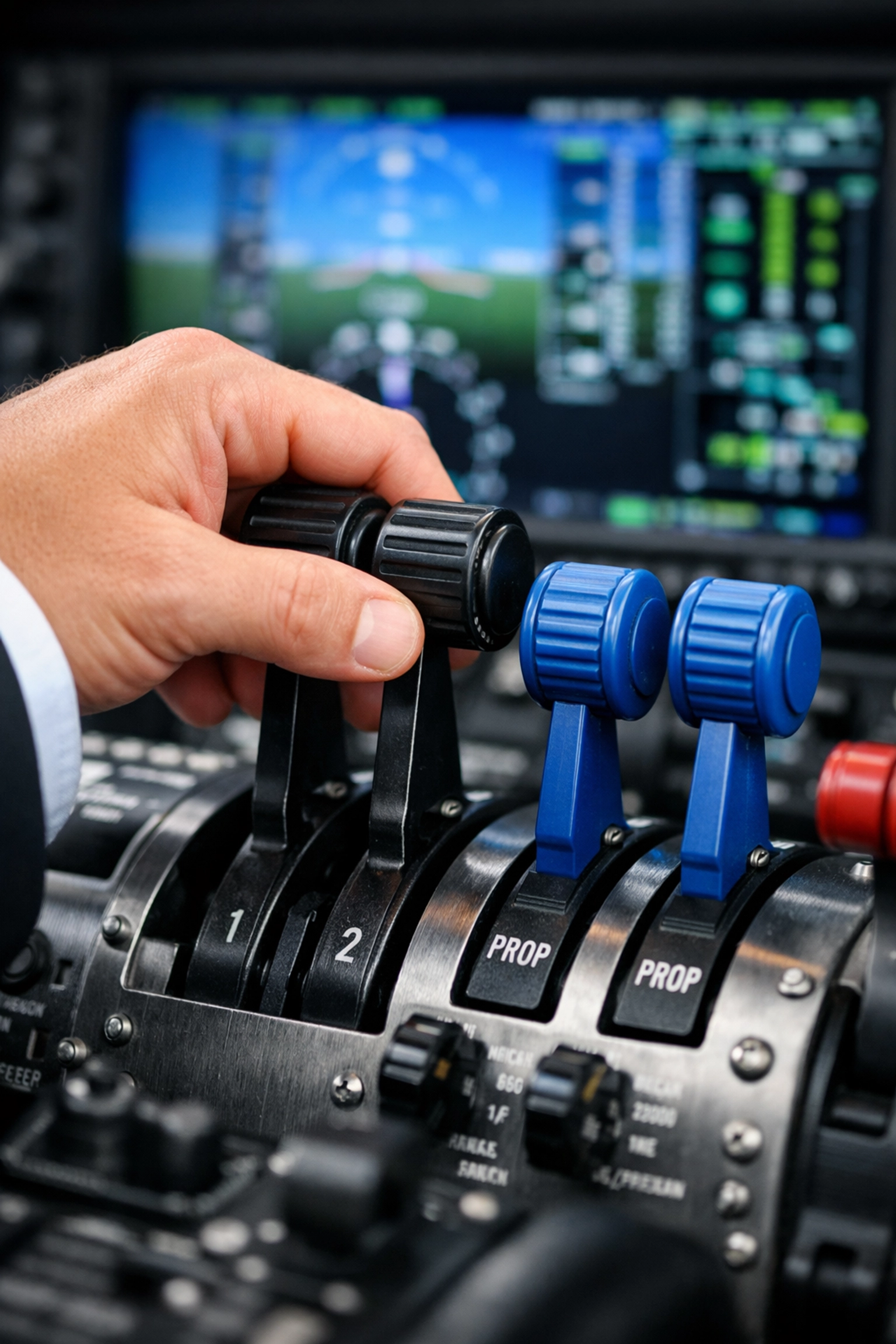
If you are a self-directed learner, start your ground school now. Don't wait until you're in the cockpit to learn about introduction to cowl flaps or va. The more you know on the ground, the more you can focus on the "feel" of the aircraft in the air.
The transition from single to multi-engine is the moment you stop being a student and start being a professional pilot. It’s challenging, it’s fast, and in a PA-30 Twin Comanche, it’s one of the most rewarding experiences in aviation.
Are you ready to stay ahead of the curve? The airlines are waiting for those multi-engine hours. Let’s get to work.

Comments