
7 Mistakes You’re Making with Your Multi-Engine Checkride (and How to Fix Them)
- Jeff Gerencser
- Apr 11
- 5 min read

The multi-engine rating is often the fastest-paced training a pilot undergoes. For many career-track aviators, it’s a transition from the light, forgiving nature of single-engine trainers to the complex, high-performance world of twins. Because the training syllabus is typically short: often just 10 to 15 hours: it is easy to let critical habits slide.
An examiner isn't just looking for you to fly the plane; they are looking for a pilot who can manage a complex system under pressure. Most checkride failures don't happen because of a lack of stick-and-rudder skill, but because of poor decision-making or a lack of systems knowledge.
Here are the seven most common mistakes seen during multi-engine checkrides and exactly how to fix them.
1. Misidentifying the Inoperative Engine
It sounds simple: an engine fails, and you identify which one it is. Yet, in the heat of a simulated emergency, applicants frequently misidentify the "dead" engine. This usually happens because they rely on engine instruments first rather than their physical senses.
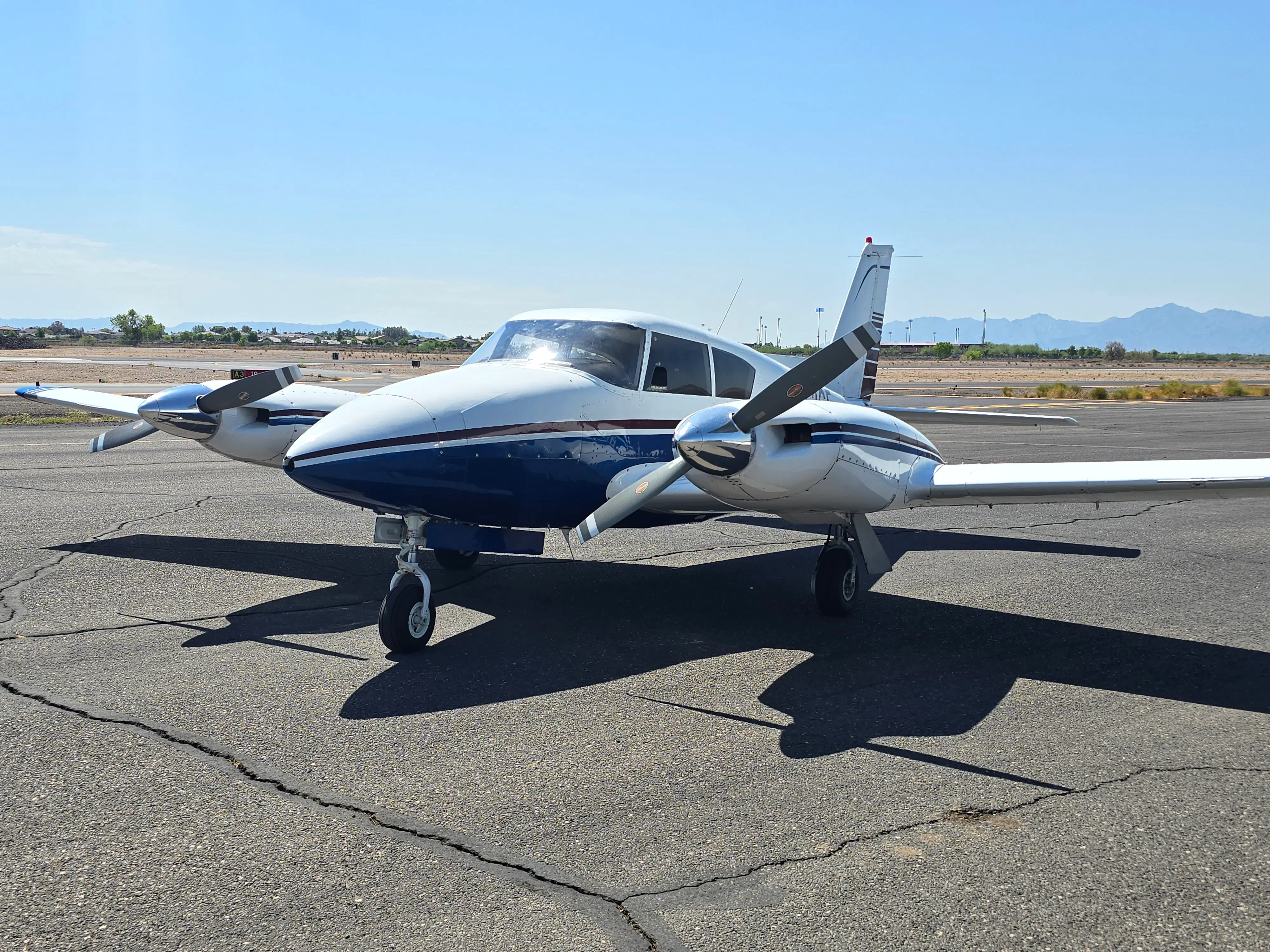
The Mistake: Looking at the tachometer or manifold pressure gauge to determine which engine failed. In a twin like the PA-30, those gauges can be misleading immediately after a failure.
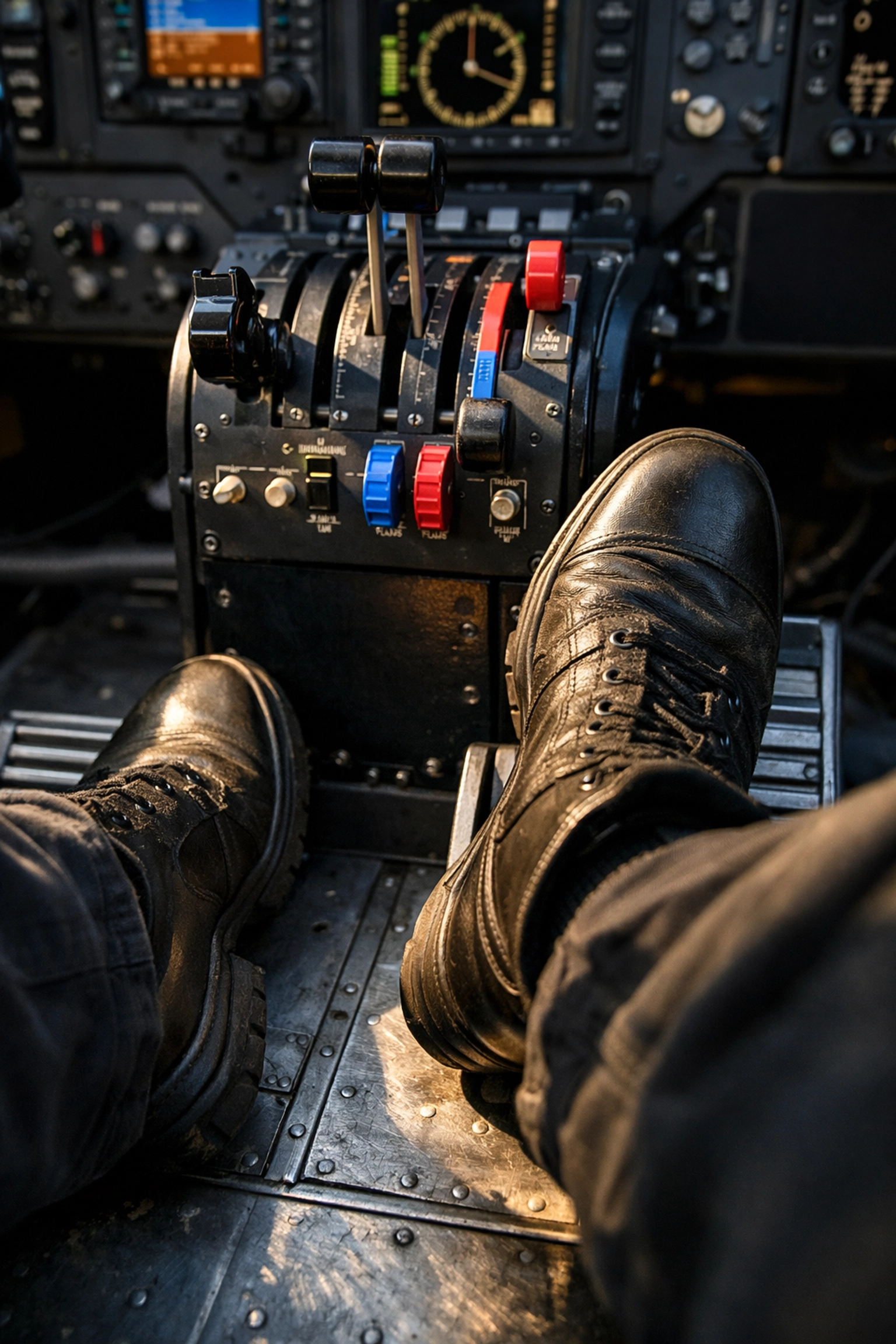
The Fix: Use the "Dead Foot, Dead Engine" rule. When an engine fails, the aircraft will yaw toward the dead engine. You will have to apply significant rudder pressure with one foot to maintain heading. The foot that is not working (the one that feels "dead" because it’s not pushing anything) is on the same side as the dead engine.
Before you touch any controls, verbalize it: "Left foot is dead, left engine is inoperative." Only after this physical identification should you verify with the throttle and move to the Multi-Engine Fuel X-Feed Systems or feathering procedures.
2. Rushing the Vmc Demonstration
The Vmc (Minimum Control Speed) demonstration is the cornerstone of the multi-engine checkride. It proves you can maintain control as the aircraft reaches its aerodynamic limits on a single engine.
The Mistake: Treating the maneuver like a "drag race" to the loss of control. Applicants often pull the power back too quickly or bleed off airspeed at a rate much faster than the FAA-mandated one knot per second. This leads to abrupt yawing and a lack of directional control.
The Fix: Precision is key. Once you have established the configuration, reduce speed slowly and deliberately. Your focus should be on the directional control of the aircraft, not just the airspeed indicator. If you reach the first sign of a loss of control: whether it's the stall horn or the inability to maintain heading: recover immediately. Understanding the ME Vmc factors is critical here; remember that Vmc is a moving target based on density altitude and weight.
3. Inadequate Rudder Coordination ("The Lazy Foot")
In a single-engine aircraft, rudder use is often secondary. In a twin with an engine out, the rudder is your life-line.
The Mistake: Applying a "stomp" of rudder and then holding it statically, or failing to apply enough pressure to counteract the asymmetrical thrust. This results in a massive sideslip, which increases drag and kills performance.
The Fix: You must be active on the pedals. As you change power settings or airspeed, the amount of rudder required changes. To fly as efficiently as possible, you need to establish a Zero Side Slip condition. This involves banking 2 to 5 degrees into the operative engine and "splitting the ball" on the turn coordinator. This reduces drag and is the difference between climbing at 200 fpm or descending at 100 fpm.
4. Systems Knowledge Gaps (The Oral Exam Trap)
You can't fly a twin professionally if you don't understand how it works. Many pilots breeze through the flying but stumble when the examiner asks about the "why" behind the levers.
The Mistake: Failing to explain the propeller system or the heating system. Examiners often ask how the propellers feather. If you simply say "it uses oil," you’ve failed to demonstrate commercial-level knowledge.
The Fix: You must be able to diagram the systems. For the PA-30 or similar twins, know the role of nitrogen charges, hub springs, and centrifugal feathering pins. Understand why the Multi-Engine Propeller Systems are designed to feather when oil pressure is lost. Similarly, be prepared to discuss the Multi-Engine Combustion Heater and its safety switches. If you can't explain the system, you shouldn't be operating it.
5. Forgetting Clearing Turns and Situational Awareness
The stress of managing two engines often causes pilots to tunnel-vision. They focus so much on the engine-out procedures that they forget they are still in shared airspace.
The Mistake: Diving straight into maneuvers like steep turns or Vmc demos without performing clearing turns. This is an automatic failure in the eyes of many examiners because it shows a lack of Pilot in Command (PIC) responsibility.
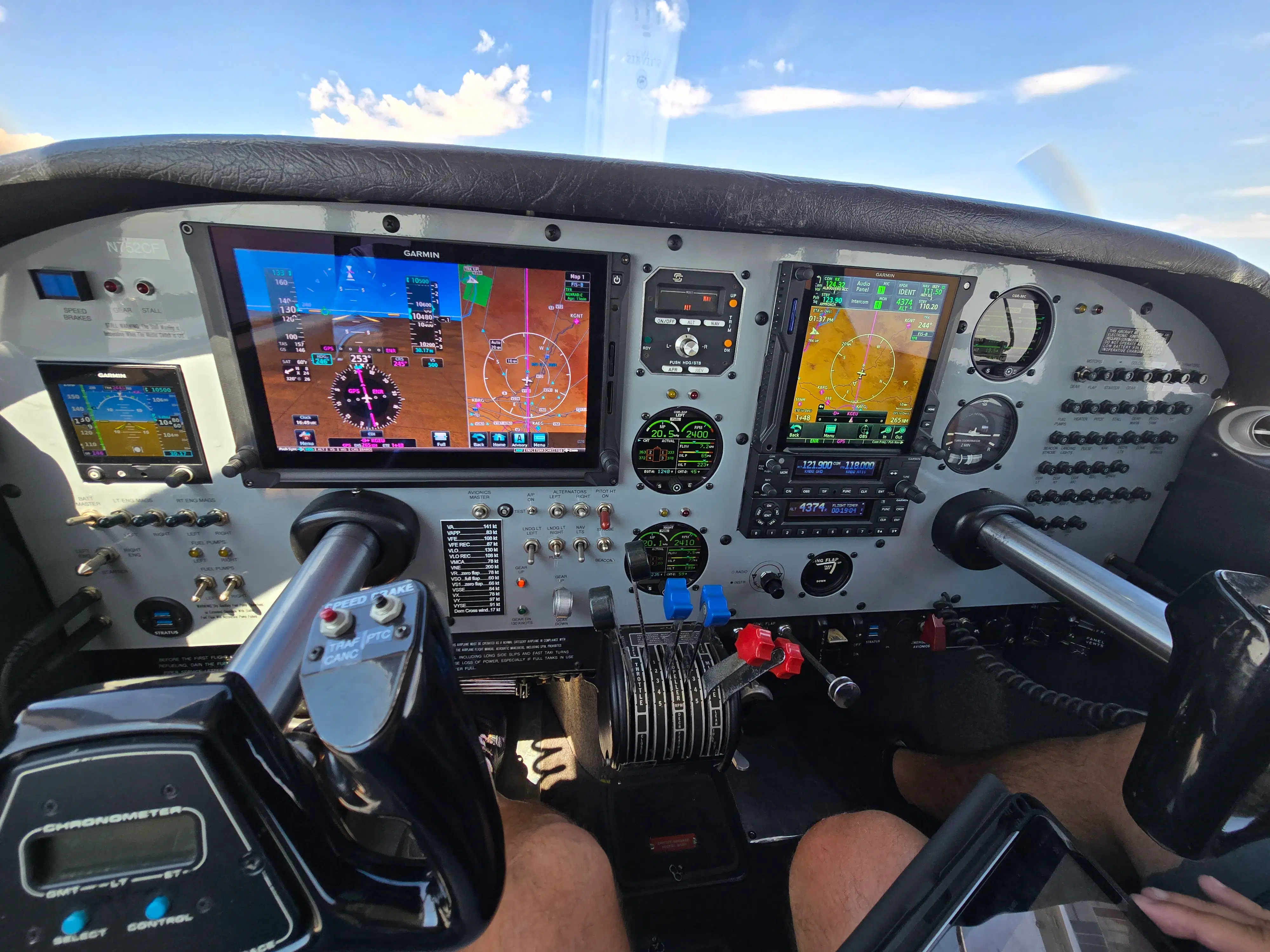
The Fix: Make clearing turns a non-negotiable part of your flow. Before every maneuver, perform two 90-degree turns or one 180-degree turn while actively scanning for traffic. This gives you a moment to breathe, reset your trim, and ensure the area is safe. Use this time to check your Multi-Engine V-Speed targets one last time.
6. Fixation on Altitude Over Airspeed
In a single-engine aircraft, if you lose an engine, you’re a glider. In a multi-engine aircraft, if you lose an engine, you’re still an airplane: but only if you maintain airspeed.
The Mistake: Trying to hold altitude at the expense of Vyse (Blue Line). If the aircraft cannot maintain altitude on one engine due to high density altitude or heavy weight, pulling back on the yoke to stay at a specific altitude will only bleed off airspeed, leading you toward Vmc.
The Fix: Pitch for Blue Line (Vyse) and take what the airplane gives you. If you are at the Multi-Engine Service Ceiling and the plane won't climb, don't force it. Maintain the best rate of climb speed and accept a drift-down if necessary. The examiner wants to see that you prioritize aerodynamic safety over a specific number on the altimeter.

7. Poor Checklist Management
The checkride is a test of your ability to follow standard operating procedures (SOPs). In a twin, things happen fast, and trying to do everything from memory is a recipe for disaster.
The Mistake: Attempting to perform "Identify, Verify, Feather" purely by memory without ever backing it up with a checklist, or conversely, burying your head in the checklist while the airplane veers off course.
The Fix: Use the "Flow then Check" method. Perform the immediate action items from memory: this is critical for safety: but as soon as the aircraft is stabilized and under control, pull out the checklist to verify you haven't missed anything. This shows the examiner you have the discipline required for professional flight decks. Review your Multi-Engine Performance and Limitations before the flight so you know exactly which items are memory items and which are not.
First Things First: Preparation is Everything
The transition to multi-engine flying is one of the most rewarding steps in a pilot's career. It represents a shift toward more complex, capable machinery. However, the margin for error is smaller.
To fix these mistakes, you need to move beyond rote memorization. You need to understand the Forces Acting on an Aircraft when thrust becomes asymmetrical and how environmental factors like Critical Density Altitude can turn a routine training flight into a high-stakes scenario.
By focusing on these seven areas: identification, coordination, speed management, systems knowledge, situational awareness, performance priority, and checklist discipline: you won't just pass your checkride. You'll become the kind of pilot that Ace Pilot Academy is proud to produce: safe, professional, and ready for the flight deck.
Stay focused, keep your feet active, and respect the Blue Line. Your career in the clouds is waiting.

Comments