
The Performance Paradox: Mastering the Single-to-Multi Transition

For many pilots, the Commercial Multi-Engine Add-On is the bridge between the world of general aviation and the flight deck of a regional jet. It’s an exciting transition, often characterized by more speed, more systems, and that second throttle quadrant. But beneath the surface of the "twice the engines, twice the safety" mantra lies a sobering technical reality that catches many transitioning pilots off guard.
In a single-engine aircraft, an engine failure is a fairly straightforward emergency: you become a glider. You pick a field, manage your energy, and fly the airplane all the way to the scene of the accident. In a multi-engine aircraft, however, an engine failure isn't just an emergency landing, it’s a high-stakes performance problem. This shift in mindset is the first and most critical hurdle for any multi-engine candidate.
The Great Mindset Shift: Emergency vs. Performance
When that single engine quits in a Cessna 172, the physics of the situation are simple. You have lost 100% of your thrust. Your goal is to manage the remaining potential energy (altitude) and kinetic energy (airspeed) to reach a safe landing spot. You are no longer "performing" in terms of climbing or maintaining level flight; you are simply managing a descent.
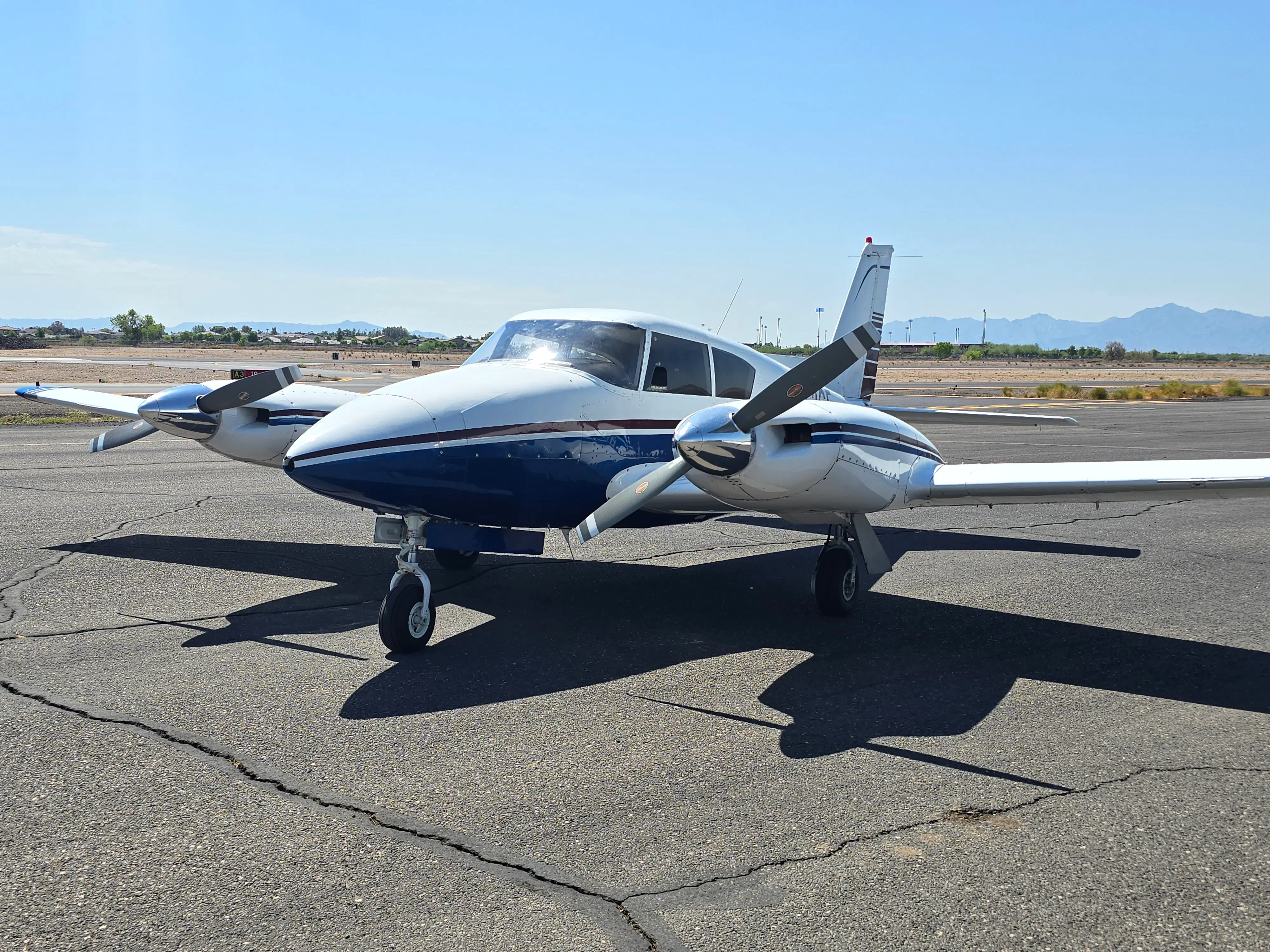
In a twin, like the PA-30 Twin Comanche, an engine failure during the takeoff or climb phase requires a much more complex cognitive process. You haven't lost all your power, but you have lost your symmetry. You now have a machine that wants to yaw and roll toward the dead engine while simultaneously losing the ability to maintain its climb gradient.
The primary mission changes from "finding a field" to "managing performance." You are now a test pilot, trying to extract the absolute maximum efficiency from a crippled airframe. If you treat a multi-engine failure like a single-engine failure, by simply pushing the nose down and looking for grass, you’re ignoring the very reason you have a second engine. Conversely, if you fail to respect the physics of the "Performance Paradox," you might find yourself in a Vmc roll before you’ve even identified which engine is dead.
Defining the Performance Paradox
This is where the math gets uncomfortable. Most students assume that if you lose one of two engines, you lose 50% of your performance. It sounds logical. If you have two 160-horsepower engines and one quits, you still have 160 horsepower left, right?
Technically, yes. You still have 50% of your available power. However, you have lost roughly 80% to 90% of your climb performance.
To understand why, we have to look at the difference between power available and power required. Imagine a light twin that requires 120 horsepower to maintain level flight at its current weight and altitude. With both engines running, you have 320 total horsepower available. Your "excess power": the stuff that actually makes the airplane climb: is 200 horsepower (320 total - 120 required).
Now, lose an engine. You are down to 160 horsepower. But that "120 horsepower required" didn't stay the same. Because you now have a windmilling propeller creating massive drag and you’re likely using rudder and a bit of bank to maintain directional control (which increases drag), your power required to maintain level flight might jump to 140 or 150 horsepower.
Suddenly, your excess power has dropped from 200 horsepower to a measly 10 or 20 horsepower. That is why your 400-foot-per-minute climb turns into a 50-foot-per-minute struggle for survival. This is the Performance Paradox: a 50% loss of power results in an almost total loss of climb capability.
The Hierarchy of Drag: Identifying the Killers
When an engine fails, the airplane becomes a "drag-limited" machine. To survive the transition and meet the Airman Certification Standards (ACS), you must understand exactly what is stealing your performance. In a light twin, drag isn't just a number; it’s a list of priorities you must address.
1. The Windmilling Propeller This is the single biggest performance penalty on the aircraft. A windmilling propeller acts like a giant plywood disc held out in the slipstream. It creates a massive amount of drag and, because it’s out on the wing, it creates a huge yawing moment toward the dead engine. In most light twins, failing to feather the prop promptly will result in a negative climb rate, regardless of what you do with the other engine.
2. The Landing Gear Extended landing gear is a significant drag producer, but it’s secondary to the windmilling prop. In many airplanes, the "gear down" penalty is enough to eliminate any hope of a climb. During the Commercial Multi-Engine checkride, the ACS expects you to recognize the configuration and clean the airplane up as part of your emergency flow.
3. Flaps While flaps provide lift, the drag penalty they incur at Vyse (the best single-engine rate of climb speed) is usually counterproductive. If you’re struggling to maintain altitude, having "barn doors" hanging off the wings is the last thing you want.
The Recovery Hierarchy: Airspeed, Feathering, Configuration
Mastering the transition from single to multi means burning a specific hierarchy into your muscle memory. When the engine fails, you don't just react; you execute a disciplined recovery focused on performance restoration.
Step 1: Airspeed (Vyse - The Blue Line) Airspeed is your most precious resource. In a twin, Vyse (Best Single-Engine Rate of Climb) is the magic number. If you are below Vyse, you are behind the power curve, and the drag is winning. If you are significantly below Vyse, you risk falling below Vmc (Minimum Controllable Airspeed), which leads to a loss of directional control. Pitching for the "Blue Line" is the first thing you do. No amount of engine power will save you if the wing is stalled or the rudder is ineffective.
Step 2: Feathering Since the windmilling prop is the biggest drag producer, stopping that "plywood disc" is your next priority. In the training environment, we simulate this, but in the real world, "Identify, Verify, and Feather" is the mantra that saves lives. Feathering the propeller aligns the blades with the airflow, drastically reducing drag and the yawing moment.
Step 3: Configuration Once the airspeed is stabilized and the prop is feathered (or simulated), you clean up the remaining drag. Gear up, flaps up. At this point, you have done everything physically possible to reduce the "Power Required" side of the equation.
Aligning with the ACS
For the Commercial Multi-Engine Add-On, the FAA isn't just looking to see if you can keep the airplane level. They are looking for professional energy management. The ACS requires you to maintain Vyse (+10/-5 knots) and maintain heading within 10 degrees while dealing with the failure.
The "Performance Paradox" becomes very real during the checkride when the examiner pulls an engine during a climb. If you hesitate to pitch for Blue Line or forget to clean up the drag, the altimeter will start winding backward. Success on the checkride depends on your ability to recognize that the airplane is no longer a high-performance twin; it is a very heavy, very draggy single-engine airplane that requires perfect technique to stay in the air.
Why the PA-30? The Professional Foundation
At Ace Pilot Academy, we utilize the PA-30 Twin Comanche for a specific reason. While the physics of performance apply to every light twin: from the Duchess to the Seminole: the PA-30 is a high-performance machine that doesn't suffer fools. It is an honest airplane that demands precise airspeed control and proper configuration management.
Mastering these concepts in a Twin Comanche builds a professional foundation that carries directly into the airlines. When you eventually move into a Boeing or an Airbus, the engines are bigger and the systems are more automated, but the "Performance Paradox" remains. You will still be managing "Power Available" versus "Power Required." You will still be prioritizing the reduction of drag.
By learning to respect the blue line and understanding the math behind the climb gradient now, you aren't just passing a checkride: you're preparing for a career where "performance" is the only thing keeping you and your passengers in the sky.
If you’re ready to stop flying and start "performing," it’s time to tackle the Multi-Engine Add-On. The transition isn't just about an extra engine; it’s about becoming the professional pilot you were meant to be. Check out our Multi-Engine Training Series to get started on the right foot.

Comments