
Mastering the ACS-25 Appendices: The CFI’s Secret Playbook
- Jeff Gerencser
- 8 hours ago
- 5 min read

The transition from the Practical Test Standards (PTS) to the Airman Certification Standards (ACS) for Flight Instructors wasn't just a formatting update; it was a fundamental shift in how we build the next generation of professional pilots. For years, the aviation community operated under what we call the "PTS Hangover." We were conditioned to treat flight training as a series of isolated maneuvers: steep turns, stalls, and lazy eights: performed in a vacuum. You either hit the altitude tolerance, or you didn't.
With the implementation of FAA-S-ACS-25, the Airman Certification Standards for Flight Instructors, the FAA has finally closed the loop. The "Secret Playbook" for any aspiring or current CFI doesn't actually lie within the tasks themselves, but within the Appendices. This is where the technical requirements, the safety protocols, and the DPE’s evaluation logic are hidden in plain sight. If you want to master the CFI checkride and, more importantly, produce safer pilots in high-performance twins like our Twin Comanche (PA-30), you have to look beyond the maneuvers and dive deep into the technical appendices.
Overcoming the PTS Hangover
The primary struggle for many veteran instructors and new CFI candidates is the integration of Risk Management. Under the old PTS, "Judgment" was an ethereal concept mentioned in the introduction but rarely quantified during the flight. The ACS changes this by requiring every task to be evaluated through three distinct lenses: Knowledge, Risk Management, and Skill.
In the Ace Pilot Academy curriculum, we emphasize that the ACS-25 is designed to eliminate the "rote" instructor. An instructor who can fly a perfect Eight-on-Pylon but cannot explain the environmental risks or the physiological factors affecting a student is no longer meeting the standard. The Appendices provide the framework to move past the PTS Hangover by defining exactly how these elements must be demonstrated and evaluated.
Appendix 1: Decoding the DPE’s Plan of Action
Appendix 1 is arguably the most critical document for a CFI candidate to understand before walking into an oral exam. It outlines how a Designated Pilot Examiner (DPE) must conduct the test. It isn't just a list of rules for the examiner; it is a map of the checkride’s DNA.
Every task in the ACS has a series of codes. These codes represent Knowledge (K), Risk Management (R), and Skill (S) elements. Appendix 1 dictates that the DPE must select at least one knowledge element, at least one risk management element, and all skill elements for every task. However, there is a "secret" logic here: if a candidate fails to demonstrate adequate knowledge in a specific area, the DPE is directed to probe deeper into the associated risk and skill elements.
For a career-focused pilot, understanding Appendix 1 means you can predict the flow of the checkride. You aren't just teaching a student how to recover from a stall; you are teaching them to identify the Risk of distractions during the stall entry (R2) and the Knowledge of stall awareness (K2). When you train in a complex aircraft like the Twin Comanche, the "Plan of Action" becomes even more technical, involving multi-engine aerodynamics and systems management that must be taught through the ACS lens.
Appendix 2: Safety of Flight and the Twin Comanche Logic
Appendix 2 is where the rubber meets the runway. It focuses on the "Safety of Flight" standards, covering integrated flight instruction, the positive exchange of flight controls, and: crucially for our multi-engine candidates: engine failure procedures.
Integrated Flight Instruction
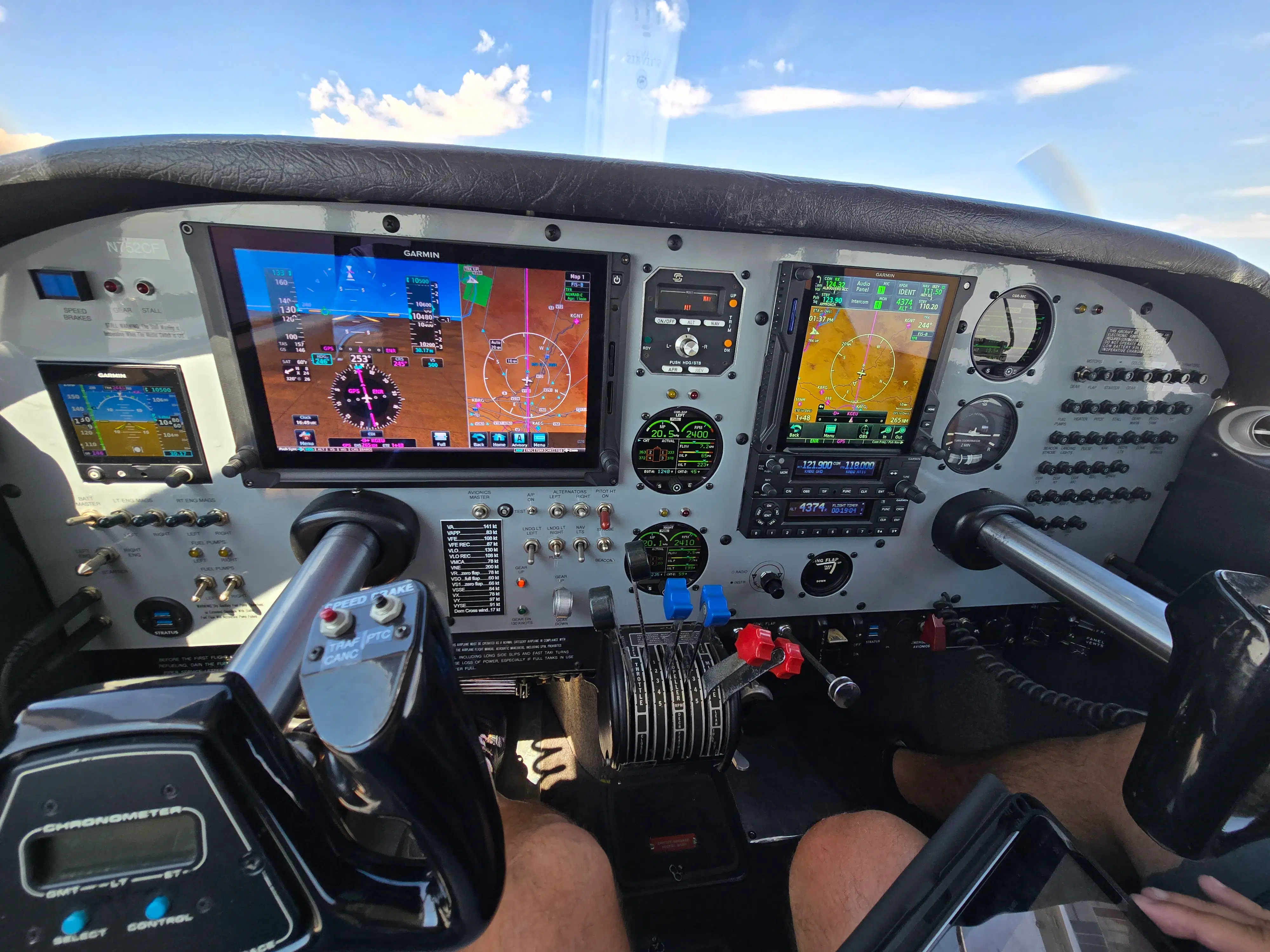
One of the most overlooked aspects of Appendix 2 is the requirement for integrated flight instruction. This means the CFI must teach the student to use both outside visual references and internal flight instruments from the very first lesson. At Ace Pilot Academy, we utilize the PA-30's advanced avionics to ensure our students aren't just "heads down" in the glass. Appendix 2 mandates that an instructor's primary focus should be on developing a student’s ability to monitor the aircraft’s performance while maintaining situational awareness outside the cockpit.
The Positive Exchange of Flight Controls
It sounds elementary, but the ACS-25 emphasizes the three-step process: "I have the flight controls," "You have the flight controls," "I have the flight controls." In a high-speed environment like a Twin Comanche on a short-field approach, a breakdown in this protocol is a disqualifying event. Appendix 2 makes it clear that the CFI is responsible for maintaining this standard at all times.
Engine Failure Logic in the PA-30
For those pursuing a Multi-Engine Instructor (MEI) rating, Appendix 2 provides the specific logic for simulating engine failures. In the Twin Comanche, we deal with "Critical Engine" aerodynamics. The ACS requires that any simulated engine failure must be performed at a safe altitude and in a manner that does not jeopardize the safety of the flight. This includes the "Zero Thrust" setting logic. Instructors must be able to explain the technical difference between a feathered prop and a windmilling prop and how that affects the aircraft's climb gradient and Vmc.

Appendix 3: Equipment Requirements and Handling the EFB Failure
Appendix 3 handles the technical requirements of the aircraft and the equipment used during the practical test. This section is vital for pilots transitioning into professional roles where they may be responsible for the airworthiness of a fleet.
The ACS requires that the aircraft must have a standard airworthiness certificate and be capable of performing all tasks required for the rating sought. In the case of the CFI-Initial, this often means a complex or technically advanced aircraft (TAA). Our Twin Comanche fits this perfectly, providing the necessary platform for demonstrating retractable gear operation and controllable pitch propellers.
The Electronic Flight Bag (EFB) Dilemma
A significant portion of Appendix 3 is dedicated to the use of Electronic Flight Bags (EFBs) like ForeFlight. While the FAA encourages the use of modern technology, the ACS is very specific about EFB failures. If a candidate’s iPad overheats or the battery dies during a checkride, the DPE will look to see if the candidate has a backup.
According to Appendix 3, an EFB failure does not necessarily mean an automatic "Disapproval," but it can lead to a "Discontinuance" if the candidate cannot continue the flight safely using secondary means (like a backup tablet or paper charts). As a CFI, you must train your students to treat the EFB as a tool, not a crutch. This is a technical skill that is evaluated under the "Risk Management" section of almost every navigation task.

The ACS Companion Guide: Your Secret Weapon
While not an appendix within the ACS-25 itself, the FAA-G-ACS-2 (ACS Companion Guide for Pilots) is the essential companion to the standards. Many CFIs overlook this document, but it contains the "Why" behind the "What."
The Companion Guide provides deep technical dives into how the FAA defines "Satisfactory Performance." For example, it clarifies the difference between a "Warning," a "Caution," and an "Advisory" in the context of risk management. For a CFI, the Companion Guide is the ultimate grading rubric. It allows you to provide objective feedback to your students based on the FAA’s own interpretative logic.
When preparing for a checkride or developing a training syllabus, referencing the Companion Guide ensures that your teaching alignment is 100% compliant with the current regulatory environment. It’s the difference between saying "that was a bad landing" and saying "the stabilization criteria defined in the ACS were not met by 500 feet AGL."
Elevating the Profession
Mastering the ACS-25 Appendices is about more than just passing a checkride; it is about professionalizing the role of the Flight Instructor. The FAA has provided us with a technical, logic-based framework that moves flight training into the modern era.
By focusing on the DPE’s Plan of Action in Appendix 1, the Safety of Flight protocols in Appendix 2, and the equipment standards in Appendix 3, you are positioning yourself as a career-oriented aviator. Whether you are teaching in a Cessna 172 or mastering the complexities of the Twin Comanche at Ace Pilot Academy, these appendices are your roadmap to excellence.
Stop teaching to the maneuvers. Start teaching to the standards. The ACS-25 is your playbook: use it to build pilots who aren't just skilled, but are masters of risk and safety.

Comments