
7 Mistakes You’re Making on Your Multi-Engine Add-On Checkride (and How to Fix Them)
- Jeff Gerencser
- Apr 5
- 5 min read

The multi-engine add-on is often described as one of the most enjoyable ratings to earn. It’s fast-paced, the airplanes are powerful, and it represents a significant step toward a professional pilot career. However, that speed is a double-edged sword. Because the training is typically condensed into a single week, many candidates arrive at the checkride with "surface-level" knowledge.
On the day of the checkride, the Designated Pilot Examiner (DPE) isn't just looking for your ability to fly the plane; they are looking for mastery of the Airplane Flying Handbook (AFH) procedures and strict adherence to the Airman Certification Standards (ACS).
Here are the seven most common mistakes pilots make during the Multi-Engine Add-On checkride and the tactical fixes to ensure you walk away with a temporary certificate.
1. Mixing Up Your V-Speeds (And Their Definitions)
In a single-engine airplane, you have V-speeds. In a multi-engine airplane, you have V-speeds that can kill you if ignored. DPEs frequently see candidates recite a number: like "80 knots for Vmc": without understanding what that number actually represents in flight.
The Mistake: Confusing Vyse (Blue Line) with Vmc (Red Line) or failing to explain the factors that affect Vmc. If you tell an examiner that Vmc is a fixed number, you’ve already lost points.
The Fix:
Memorize the "Why": Know that Vmc is a directional control speed, not a performance speed.
Understand the Conditions: Be prepared to list the factors used by manufacturers to determine Vmc (Combust-P).
Blue Line is Life: Vyse is your best rate of climb with an engine inoperative. On your checkride, if an engine fails, your airspeed indicator should be glued to that blue line.

2. Failing the "Identify, Verify, Feather" Process
Under the pressure of a simulated engine failure, the "startle factor" often leads to rushed decisions. This is where pilots feather the wrong engine.
The Mistake: Moving levers too quickly. A common checkride error is "identifying" the dead engine (Dead Foot, Dead Engine) but then grabbing the propeller lever of the operating engine because the pilot is rushed.
The Fix:
Dead Foot, Dead Engine: If you are pushing right rudder to keep the nose straight, your left foot is doing nothing. That means the left engine is the "dead" one.
Verbalize and Touch: Say it out loud: "Left foot is dead, left engine is dead. Verifying... closing left throttle."
The Pause: After closing the throttle, wait a beat. Does the aircraft yaw further? If not, you’ve verified correctly. Only then do you move to the feathering step.
3. Weak Communication with the DPE
A checkride is a test of your command of the aircraft. If the DPE doesn't know what you are doing, they cannot evaluate you effectively.
The Mistake: Not clarifying procedures during the pre-flight briefing. For example, some examiners want a simulated engine shutdown to result in a full feather and a complete engine secure, while others only want to see the "drill" performed to a certain point.
The Fix:
The "What-If" Briefing: Before you even start the engines, brief the DPE. "If we have an engine failure on the takeoff roll, I will abort. If we are above Vr with gear down, I will land on the remaining runway. If gear is up, I will perform the engine failure in flight checklist."
Ask for Expectations: Ask the DPE specifically: "During the Vmc demo, do you want me to recover at the first sign of loss of directional control or at the first sign of a stall?"
4. Forgetting the Basics Under Multi-Engine Stress
The complexity of managing two engines often causes pilots to regress to Private Pilot-level mistakes.
The Mistake: Pilots get so focused on the critical engine and V-speeds that they forget to call for ATIS, forget to brief the approach, or miss a "Gear Down" check.
The Fix:
Standard Operating Procedures (SOPs): Use your checklists religiously. Do not flow from memory unless you follow up with a checklist.
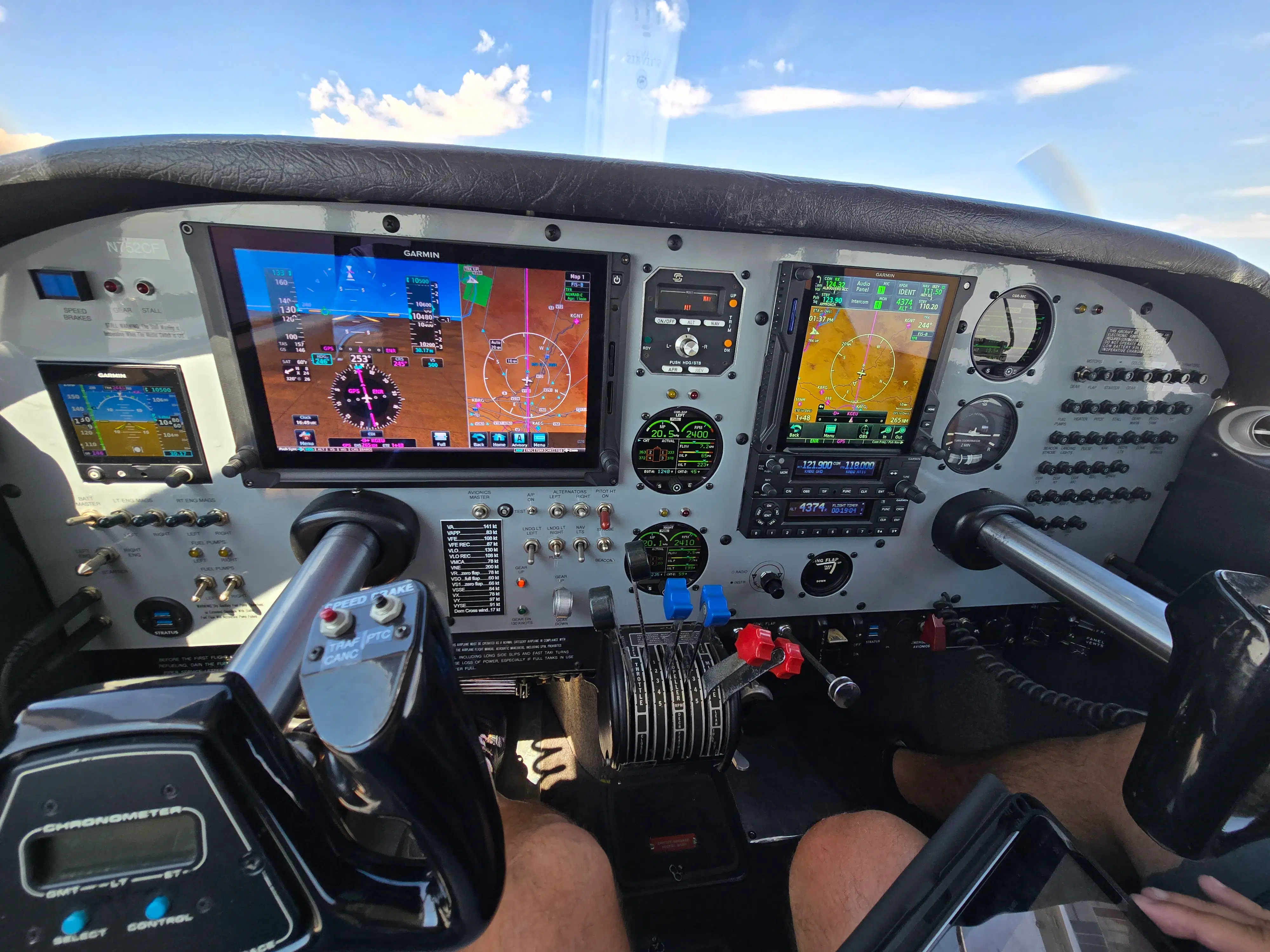
The GUMP Check: In a complex multi-engine aircraft like the Piper PA-30 Twin Comanche, the "Gas, Undercarriage, Mixture, Prop" check should be performed at least three times: entering the downwind, turning base, and on final.
Stay Ahead of the Plane: If you find yourself "waiting" for the next maneuver, you should be checking the weather or reviewing the next approach plate.
5. Improper Vmc Demonstration Execution
The Vmc demonstration is the "make or break" maneuver of the multi-engine checkride. It is designed to show you can maintain control, but it is also one of the most dangerous maneuvers if performed incorrectly.
The Mistake: Failing to recognize the loss of directional control or, worse, allowing the aircraft to stall before recovering. According to the ACS, the maneuver must be terminated at the first sign of either loss of directional control OR the stall warning/buffet.
The Fix:
Rudder Authority: As you bleed off airspeed, your rudder will eventually be floored. The moment the nose begins to yaw against your input, you have lost directional control.
The Recovery: Reduce power on the operating engine immediately and pitch down. You cannot regain control by adding more rudder; you regain control by reducing the asymmetric thrust and increasing airflow over the rudder.
Don't Be a Hero: Do not try to "hold it" to see how far you can go. Recover decisively.

6. Poor Management of the Single-Engine Approach
The single-engine instrument approach is often the final hurdle. It’s a high-workload environment where small errors compound quickly.
The Mistake: Failing to start the timer at the Final Approach Fix (FAF) or losing track of the missed approach instructions. Many pilots also forget that gear extension on a single-engine approach creates significant drag, often leading to an unplanned descent below the glidepath.
The Fix:
Stay Configured: Know exactly when your gear is going down. In many light twins, we delay gear extension until the "glide slope intercept" to maintain performance.
Small Corrections: Do not "chase" the needles. On one engine, your power requirements are different. Use small, incremental throttle movements.
The "Going Missed" Mindset: If the approach is unstable, call the missed approach. A DPE would much rather see you recognize an unsafe situation than try to "save" a bad landing on one engine.
7. Gaps in Systems Knowledge
The oral portion of the checkride is where the foundation is laid. If you struggle here, the DPE will be looking for reasons to fail you in the air.
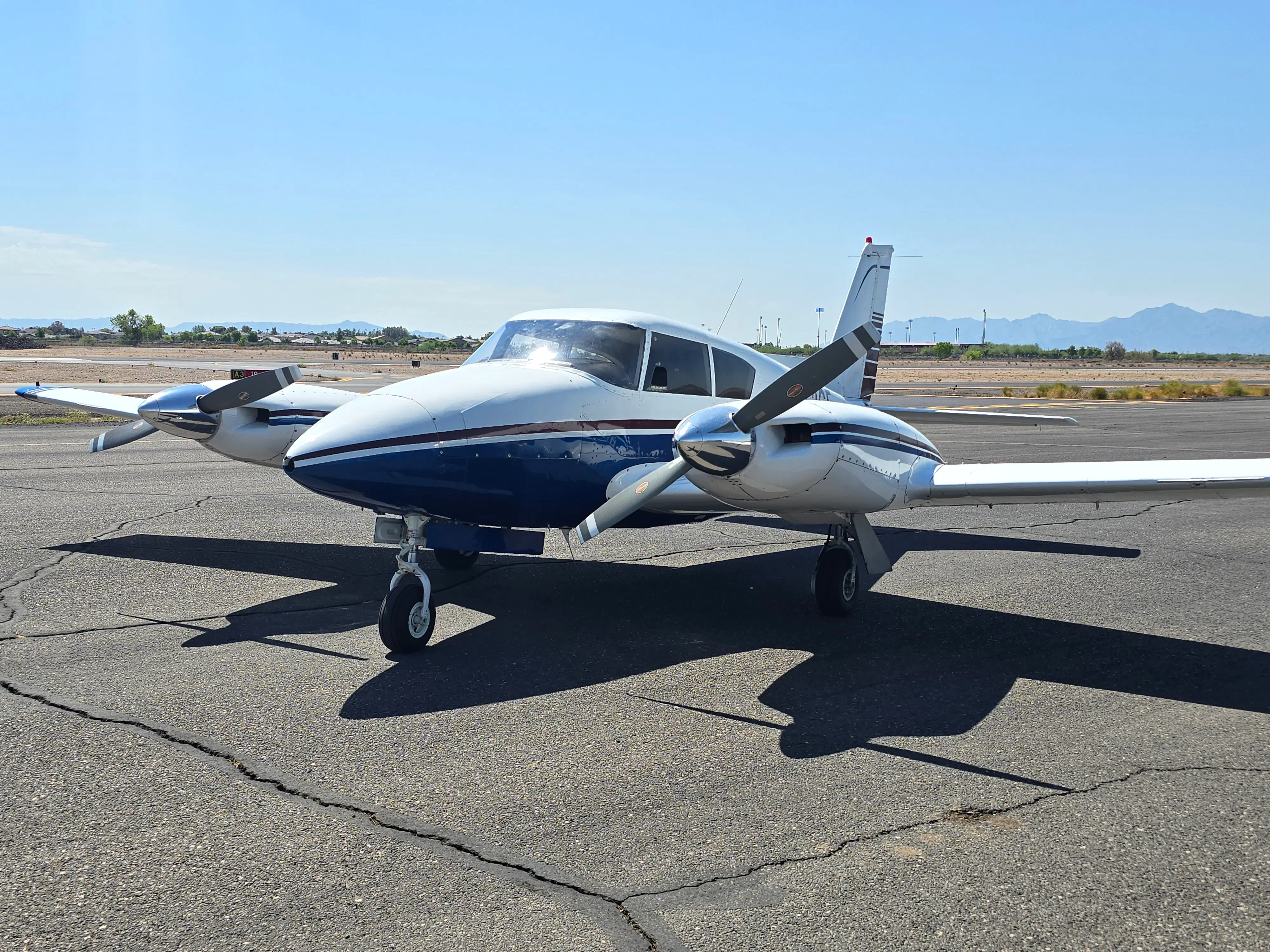
The Mistake: Not knowing the specifics of the fuel system or the heater. In the Twin Comanche, for example, knowing how the cross-feed system works is vital. Many students give "generic" answers rather than aircraft-specific ones.
The Fix:
Study the POH: You must know the "Systems Description" chapter of your Pilot's Operating Handbook inside and out.
Draw the System: Can you draw the fuel system from memory? If not, you don't know it well enough.
Understand the "Why": Don't just know that the landing gear is electric; know what happens if a limit switch fails or how the manual extension works. Check out the Multi-Engine Training Series for a deep dive into these systems.
Conclusion: Fly the Airplane First
The Multi-Engine Add-On checkride is a test of your ability to manage resources and remain calm when things go wrong. Most failures aren't due to a lack of flying skill: they are due to a lack of preparation or a lapse in judgment.
Focus on your V-speeds, maintain disciplined checklists, and communicate clearly with your examiner. Treat the checkride not as a hurdle, but as your first flight as a professional multi-engine pilot.
If you are ready to master the twin, ensure you are training with the right standards. Precision in the cockpit leads to success on the checkride. Stay focused, stay disciplined, and keep that blue line in sight.

Comments