
The Ultimate Guide to Your Multi-Engine Add-On: Everything You Need to Succeed
- Jeff Gerencser
- Apr 6
- 5 min read

The multi-engine rating is a pivotal milestone for any pilot eyeing a career in professional aviation. Whether you are aiming for the airlines, corporate flight departments, or charter operations, the ability to manage more than one engine is a prerequisite. This guide consolidates the essential knowledge required to master the transition from single-engine to multi-engine aircraft, focusing on the standards set by the FAA Airplane Flying Handbook (AFH) and the Airman Certification Standards (ACS).
Why the Multi-Engine Add-On Matters
For most pilots, the multi-engine add-on is the first time they encounter significant aerodynamic changes caused by asymmetrical thrust. This rating is not just about having more power; it is about managing the risks and complexities that come with that power. Unlike the Private or Commercial initial certificates, the multi-engine add-on typically does not require a written FAA knowledge test, provided you already hold a pilot certificate. The focus is entirely on systems knowledge, flight proficiency, and emergency management.
First Things First: Understanding the Rating
The multi-engine rating is an "add-on" to your existing Private or Commercial certificate. According to 14 CFR Part 61, there are no specific minimum flight hour requirements for the rating. Instead, you must receive a logbook endorsement from an authorized instructor certifying that you are prepared for the practical test.
Success in this rating is built on three pillars:
Systems Mastery: Understanding how your specific aircraft operates.
V-Speed Proficiency: Memorizing and applying critical performance speeds.
Emergency Procedures: Executing engine-out flows with muscle-memory precision.
Master the Aircraft: The PA-30 Twin Comanche
At Ace Pilot Academy, the Piper PA-30 Twin Comanche is a primary trainer for multi-engine students. Known for its efficiency and responsive handling, it is an ideal platform for learning multi-engine dynamics.
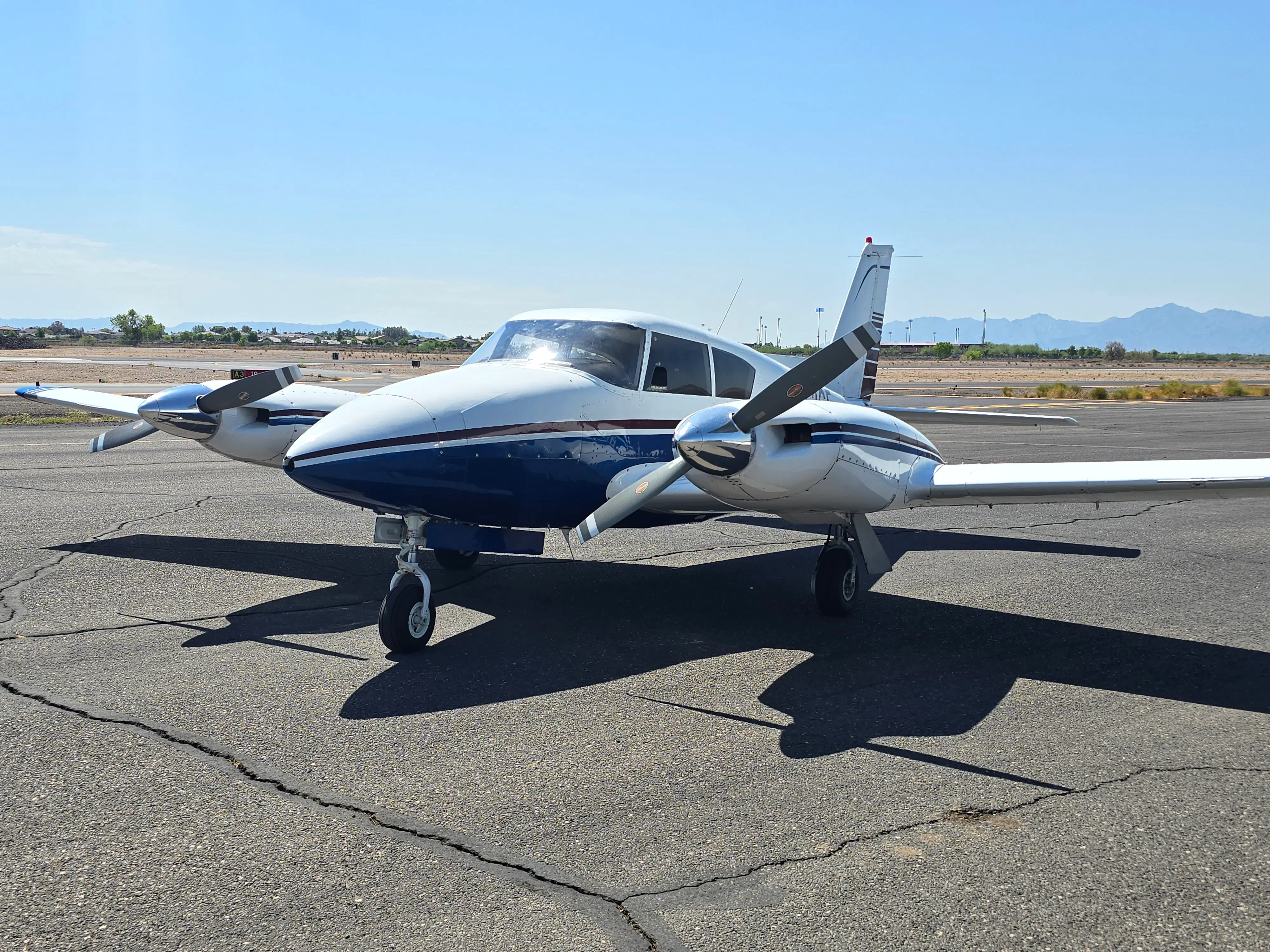
Key Systems to Study
Multi-engine aircraft have significantly more complex systems than their single-engine counterparts. You must be able to explain the following for your checkride:
Constant-Speed Propellers: Understand the role of nitrogen charge, oil pressure, and counterweights in feathering.
Fuel System: Learn the cross-feed procedures to maintain lateral balance during one-engine-inoperative (OEI) flight.
Landing Gear: Master the hydraulic or electric extension/retraction cycles and the emergency extension procedures.
Electrical System: Identify how many alternators the aircraft has and how the bus system distributes power if one fails.
Multi-Engine V-Speeds Explained
V-speeds are the foundation of multi-engine safety. In a single-engine plane, an engine failure usually results in a glide. In a twin, it results in asymmetrical thrust, which can lead to a loss of control if V-speeds are ignored.
The "Critical Three"
Vmc (Red Line): Minimum Control Speed. This is the lowest airspeed at which the aircraft is directionally controllable with the critical engine inoperative.
Vyse (Blue Line): Best Rate of Climb Single-Engine. This speed provides the greatest gain in altitude per unit of time with one engine out.
Vsse: Intentional One-Engine Inoperative Speed. This is a safety margin speed used during training to prevent accidental stalls during simulated engine failures.

Understanding how density altitude, weight, and center of gravity affect Vmc is a common area of failure on oral exams. Always refer to the FAA Airplane Flying Handbook for the aerodynamic factors influencing these speeds.
The Core Skill: One-Engine-Inoperative (OEI) Flow
The hallmark of a professional multi-engine pilot is the ability to handle an engine failure calmly. The FAA ACS requires precise execution of the engine-out flow. Memory items must be performed immediately, followed by the use of a checklist once the aircraft is stabilized.
The Step-by-Step Flow:
Maintain Control: Pitch for Blue Line (Vyse) and use the rudder to stop the yaw. Bank 2–3 degrees into the operative engine to maintain "Zero Side Slip."
Power Up: Mix, Props, Throttles: Full forward.
Clean Up: Flaps up, Gear up.
Identify: "Dead foot, dead engine." If your left foot is not pushing a rudder pedal to maintain heading, the left engine has likely failed.
Verify: Retard the throttle of the suspected dead engine to confirm there is no change in yaw.
Feather/Secure: Follow the POH to feather the propeller and shut down the failed engine.
Accelerated Flight Training: Is It Right for You?
Many pilots opt for accelerated multi-engine programs, which can be completed in as little as 3 to 5 days. This immersion helps keep the information fresh and allows for rapid skill acquisition.
Pros of Accelerated Training:
High retention of V-speeds and flows.
Minimized downtime between lessons.
Faster path to career milestones.
Cons of Accelerated Training:
Requires 100% dedication with no outside distractions.
Can be physically and mentally exhausting.
For more information on training structures, you can view our available courses.
Prepping for the Commercial Multi-Engine Add-On Checkride
The checkride is the final hurdle. It consists of an oral exam and a practical flight test. To succeed, you must meet the standards outlined in the Commercial Pilot ACS.
Common Checkride Maneuvers:
Vmc Demonstration: Slowing the aircraft until directional control is lost to understand the symptoms of Vmc.
Engine Failure During Takeoff: Managing a simulated failure before reaching a safe altitude.
Instrument Approach (OEI): Flying a precision or non-precision approach with one engine simulated inoperative.
Short-Field Landings: Demonstrating precision and speed control with both engines operating.
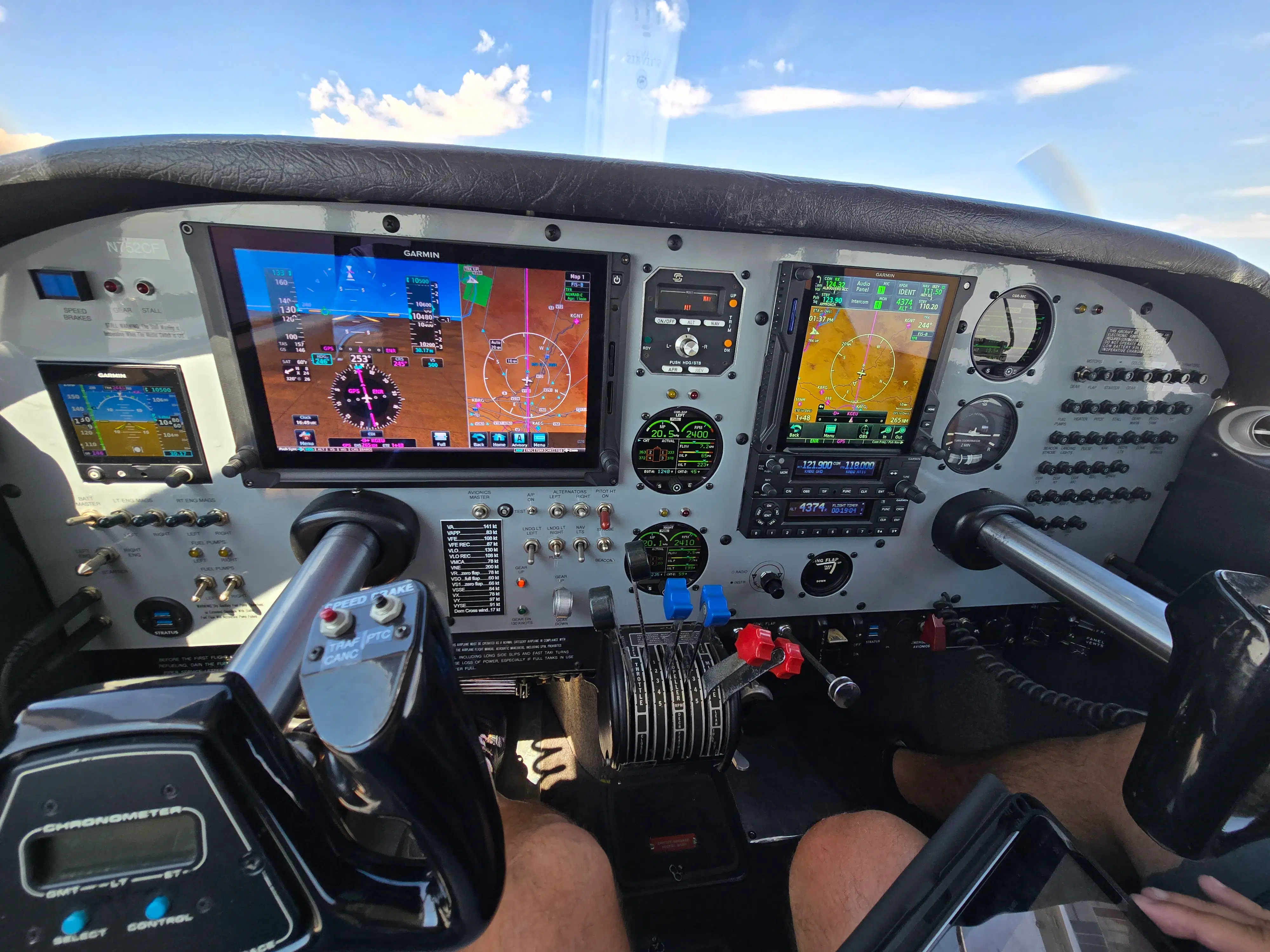
Using modern avionics, like the G1000 found in many PA-30s, can significantly reduce pilot workload during these maneuvers by providing clear engine monitoring and situational awareness.
Multi-Engine Time Building: Tips for Your Career
Once you have the rating, the next challenge is building time. Most airline jobs require a specific number of multi-engine hours (often 25 to 50 hours minimum for regional entry).
Split Time: Partner with another pilot to share the costs of the aircraft. One pilot flies under the hood (simulated instrument) while the other acts as a safety pilot.
Instruction: If you are a CFI, getting your MEI (Multi-Engine Instructor) is one of the fastest ways to build paid multi-engine time.
Fly the PA-30: The Twin Comanche is a favorite for time building because its fuel burn is comparable to some high-performance singles, making it more affordable to operate.
Practical Tips for Success
Chair Fly: Practice your engine-out flows in a chair at home until you can do them without thinking.
Read the POH: The Pilot Operating Handbook for your specific tail number is the "bible" for your checkride. Know the limitations and emergency procedures cold.
Stay Ahead of the Airplane: Multi-engine aircraft fly faster and require quicker decision-making. Always be thinking five miles ahead of your current position.
Use the ACS: Don't guess what will be on the test. The Airman Certification Standards tell you exactly what the examiner is looking for.

Summary
The multi-engine add-on is a demanding but rewarding rating. By mastering the V-speeds, understanding the systems of the PA-30, and perfecting your engine-out flows, you set yourself up for success on the checkride and in your future aviation career. Preparation is the antidote to pressure. Study the standards, practice the maneuvers, and fly with precision.
For those ready to take the next step in their professional development, the path is clear: focus on the fundamentals and stay committed to the mastery of multi-engine flight.

Comments