
The Fastest Way to Get Your Multi-Engine Add-On (Without Failing Your Checkride)
- Jeff Gerencser
- Apr 14
- 5 min read

Welcome to day two of our "Training Week" series. If you’re reading this, you’ve likely realized that a single engine can only take your career so far. To move into the left seat of a jet or secure a high-paying charter gig, the multi-engine rating is the non-negotiable next step.
Most pilots approach the commercial multi engine add-on the same way they approached their Private Pilot Certificate: one or two lessons a week, spread out over three months. In the world of professional aviation, that is a mistake. This rating isn't about learning to fly all over again; it is about mastering the specific aerodynamics, systems, and emergency procedures associated with having a second power plant.
The fastest way to get it done: and the best way to ensure you pass the checkride: is through accelerated flight training.
The Case for Immersion: Why Accelerated Wins
A multi-engine rating is highly technical but relatively short in terms of required flight hours. There is no FAA-mandated minimum hour requirement for the add-on, though most pilots reach proficiency in 10 to 15 hours.
When you spread those 15 hours over several months, you spend the first twenty minutes of every lesson relearning what you forgot since last Tuesday. In an accelerated program, you live and breathe the aircraft for five to seven days straight. Your brain stays in "multi-engine mode." The flows become muscle memory, and the speeds become second nature.
This level of immersion is how you build the professional standards required by the airlines. You aren't just passing a test; you are training for a career.
First Things First: The Prerequisites
Before you show up for an accelerated week, you need your paperwork in order. Speed requires preparation. You must hold at least a Private Pilot Certificate, though most of our students are working toward their Commercial rating.
Current Medical: Ensure your medical certificate is valid.
Ground Knowledge: Do not show up expecting to learn the basics of multi-engine propeller systems for the first time. You should have the written knowledge under control so the flight time can be spent on application.
The ACS: Download the Airman Certification Standards (ACS). This is the "cheat sheet" for your checkride. If you know what the examiner is looking for, you can train specifically to those tolerances.
The Machine: Training in the PA-30 Twin Comanche
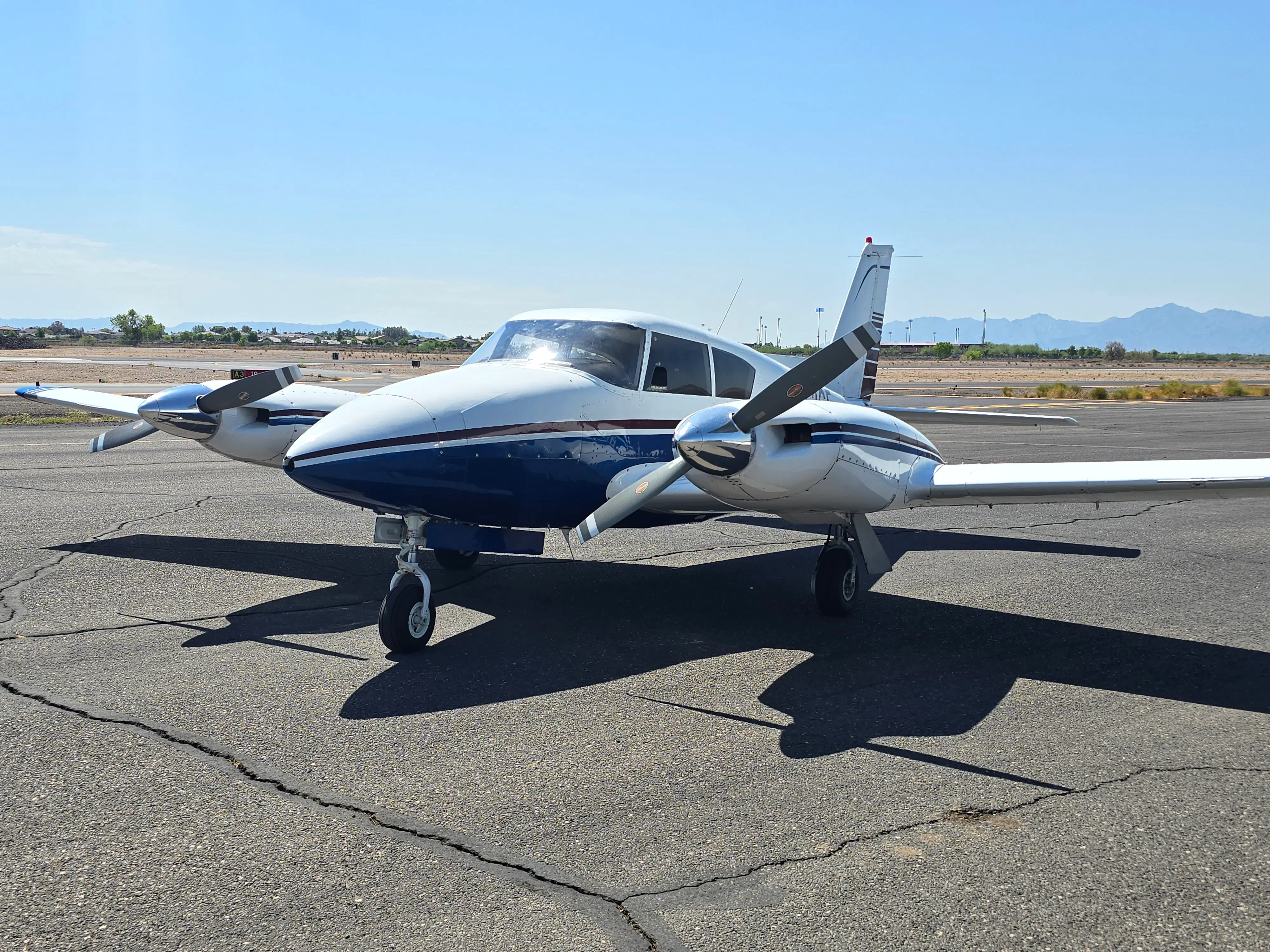
At Ace Pilot Academy, we utilize the Piper PA-30 Twin Comanche. It is widely considered one of the most efficient and capable multi-engine trainers ever built. Unlike some of the heavier "tank" twins, the PA-30 is responsive. It rewards good technique and highlights poor ones, making you a sharper pilot.
Our PA-30 is equipped with modern avionics, including the G1000 glass cockpit. Training on glass is essential for the modern career path. If you can master multi-engine performance and limitations while managing a high-tech flight deck, you’ll be years ahead of the competition when you reach the airlines.

Mastering the Aerodynamics: Vmc and the Critical Engine
The biggest hurdle for any multi-engine student isn't flying with two engines; it’s flying with one. The ACS focuses heavily on your ability to maintain control during an engine failure. To pass, you must demonstrate a deep understanding of Vmc (Minimum Controllable Airspeed) and the critical engine.
In a twin-engine aircraft, if you lose an engine, the plane wants to do two things: yaw and roll toward the dead engine. Your job is to stop that movement instantly. We focus on the "Identify, Verify, Feather" flow.
Identify: Which foot is doing nothing? "Dead foot, dead engine."
Verify: Retard the throttle of the suspected dead engine to ensure there is no change in yaw.
Feather: Reduce drag by feathering the prop.
Understanding the forces acting on an aircraft during asymmetric thrust is the difference between a successful checkride and a dangerous situation.

Zero Side Slip: The Secret to Performance
One of the most common reasons pilots struggle during the multi-engine checkride is failing to maintain the zero side slip condition. When an engine fails, simply stomping on the rudder isn't enough. To achieve maximum performance and minimum drag, you must bank slightly (usually 2 to 5 degrees) into the operative engine and "split the ball" on the turn coordinator.
If you don't master this, the aircraft will drag through the air, and your climb performance will vanish. In a training environment, this results in a failed maneuver. In the real world, it can be the difference between clearing an obstacle or not.
How to Avoid the "Checkride Fail"
The FAA examiner isn't looking for a perfect pilot; they are looking for a safe, competent pilot who follows procedures. Here are the three main pitfalls that lead to failure:
1. Rushing the Flows
In an accelerated program, the pressure is on. Pilots often try to move too fast and skip steps in their emergency checklists. Slow is smooth, and smooth is fast. Use your "touch drills" on the ground until you can find the multi-engine fuel cross-feed systems or the multi-engine combustion heater controls with your eyes closed.
2. Poor Altitude Management
During maneuvers like steep turns or engine-out tracking, the ACS allows very little deviation. If you are focused solely on the engine gauges and forget to fly the airplane, you will bust your altitude.
3. Misunderstanding the Environment
Factors like critical density altitude and ground effect play a massive role in multi-engine performance. If you try to force a twin off the ground before it reaches its safe single-engine climb speed (Vyse), you are putting yourself in a "dead man's curve."

The Professional Approach
At Ace Pilot Academy, we don't just teach you how to pass a checkride. We teach you how to operate a multi-engine aircraft with the discipline of an airline captain. This means using standardized callouts, following rigorous checklists, and understanding the "why" behind every action.
Whether we are discussing aircraft pressurization systems or the nuances of anti-ice and de-ice systems, our goal is to build a well-rounded professional. The accelerated format allows us to maintain this high-intensity professional environment without the distractions of a drawn-out schedule.
Your Path Forward
If you are ready to stop being a "paper pilot" and start building the hours that actually impress recruiters, the multi-engine add-on is your next mission. An accelerated week is intense. It’s demanding. But it is the most efficient way to level up your career.
Don't wait for the "right time" to schedule your training. In aviation, the right time is always now. Review the multi-engine training series, get your prerequisites in order, and prepare to fly like a pro.
Check back tomorrow as we continue Training Week with a deep dive into why training to the minimums is a career killer. We’ll see you in the cockpit.

Comments