
Stop Wasting Time on Boring Manuals: 7 Quick Hacks to Master Multi-Engine V-Speeds
- Jeff Gerencser
- 18 hours ago
- 4 min read

If you’re still trying to memorize multi-engine V-speeds by rereading the same dry pages over and over, you’re making this harder than it needs to be.
I’ve been in aviation for over 30 years, and having seen hundreds of checkrides as an examiner, I can tell you this: pilots usually don’t struggle with V-speeds because they’re lazy. They struggle because they study them in a way that doesn’t stick under pressure. Reading numbers in a manual is one thing. Recalling them in the airplane, while managing performance and directional control, is something else entirely.
The good news is that you do not need a complicated system. You need a few simple mental shortcuts that make the important speeds easier to understand, remember, and apply. In multi-engine training, two of the most important reference speeds students need to keep straight are the 90 MPH Red Line and the 105 MPH Blue Line. Once you understand what those speeds mean and how they relate to each other, your checkride prep gets a whole lot cleaner.
7 Quick Hacks to Master Multi-Engine V-Speeds
Hack 1: Visualize the Tape
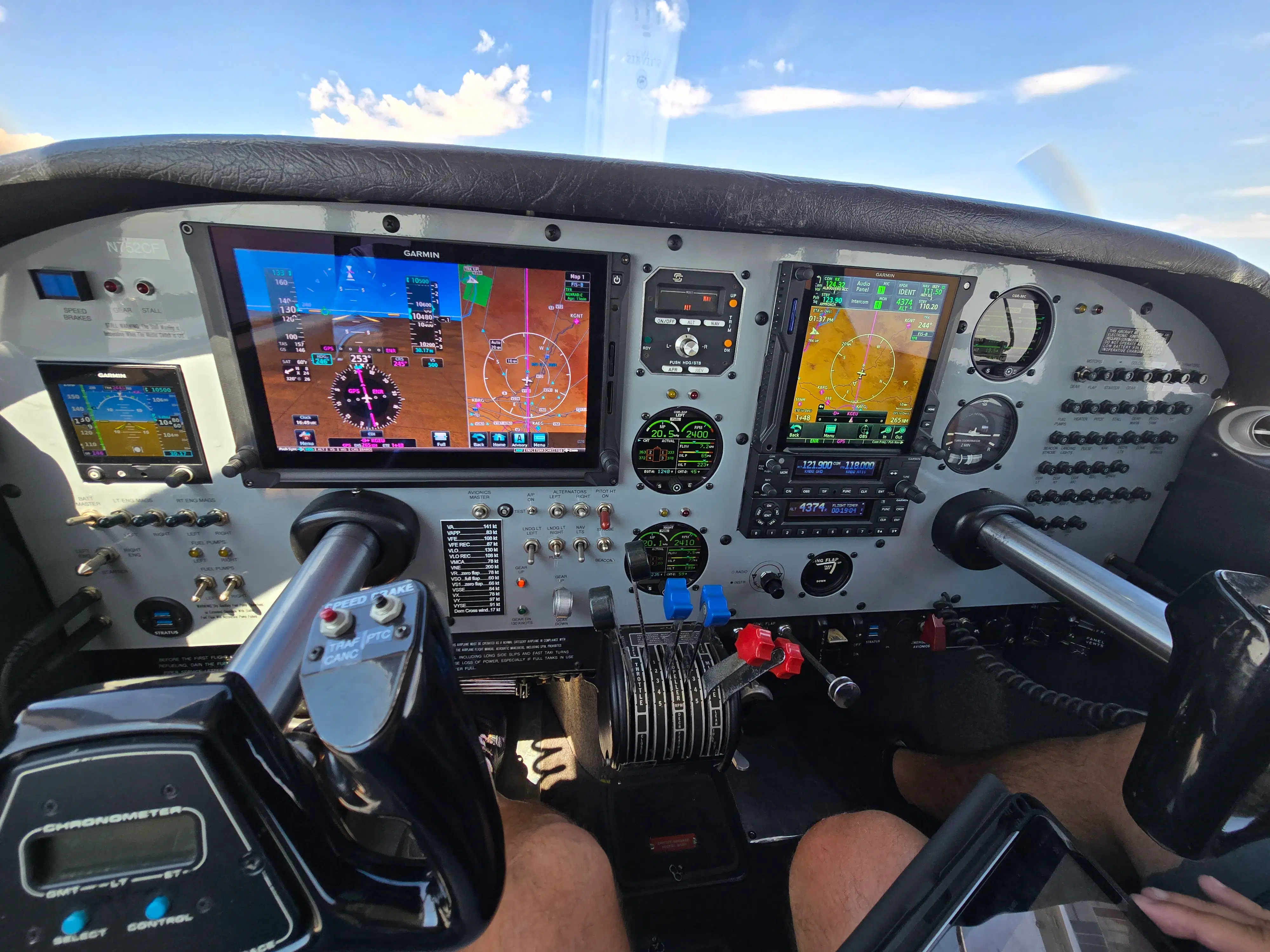
Stop thinking about V-speeds as random numbers and start thinking about them as visual references.
If you’re training in a modern cockpit with an airspeed tape, use that to your advantage. Burn the color cues into your brain:
The Red Line (Vmc) is 90 MPH
The Blue Line (Vyse) is 105 MPH
Do not just memorize 90 and 105 as isolated numbers. Notice where they live on the display relative to each other. Your brain often recalls position and color faster than digits. On a checkride, that matters. You want to immediately recognize the red line as a hard limit and the blue line as the target speed that gives you the best single-engine climb performance.
Hack 2: Blue Is for Best
Vyse is the best rate of climb speed with one engine inoperative. In this training context, that Blue Line is 105 MPH.
The shortcut is simple: Blue is for Best.
If you lose an engine, the blue line is where you want to be. It gives you the best chance of preserving climb performance when the airplane is no longer producing full thrust. A lot of pilots instinctively pull back, trying to force the airplane to climb, but if that pitch change drags you below 105 MPH, you can easily make the situation worse instead of better.
When things get busy, keep it simple: pitch for blue.
Hack 3: Respect the Red
Vmc is one of the most misunderstood speeds in multi-engine training. In this example, the Red Line is 90 MPH.
Here’s the key idea: Vmc is a limit, not a target.
I still see pilots treat the red line like a number they should hover near during demonstrations and engine-out discussions. That misses the point. The red line marks the lower boundary of directional control under the certified conditions used to establish minimum control speed. It is not where you want to operate casually.
Think of 90 MPH as the edge of the cliff, not the center of the runway. You respect it, you understand it, and you stay safely away from it unless training specifically requires a demonstration under controlled conditions with an instructor.
Hack 4: Memorize the 15 MPH Buffer
Now look at the gap between the two big numbers:
Vmc = 90 MPH
Vyse = 105 MPH
That is a 15 MPH difference.
This is a great memory hack because it helps you organize the information into a performance window instead of a pile of unrelated facts. If 105 MPH is your target and 90 MPH is your danger zone, then you instantly understand the margin you’re working with.
That mental spacing helps on a checkride and in the airplane. Instead of reacting late, you’re already aware of how quickly performance can erode as airspeed trends downward.
Hack 5: Learn in Motion, Not Just on the Page
Reading matters, but static text alone is a slow way to learn something as dynamic as multi-engine performance.
When you can see a training scenario unfold visually, the relationships start to click faster. You can watch yaw develop, see airspeed trend toward 90 MPH, and understand why maintaining 105 MPH matters. That kind of mental picture is much easier to recall than a line in a handbook.
That’s one reason we built our training around FAA-based material presented in a more modern way. If you want V-speeds to stick, do not just read them. Study them in a format that shows you what they actually look like in operation.
Hack 6: Connect Power, Yaw, and Speed
Every important V-speed has a physical feel attached to it.
At 105 MPH (Blue Line): the airplane generally feels more stable, controllable, and capable of giving you the best available single-engine climb performance.
Approaching 90 MPH (Red Line): control margins shrink, rudder effectiveness degrades, and the airplane will demand your attention fast.
Do not stare at the gauge and ignore the airplane. Feel the rudder pressure. Notice the yaw. Pay attention to how the airplane responds to pitch and power. The more you connect those physical cues to the numbers, the faster you move beyond rote memorization.
Hack 7: Play the What-If Game
One of the best mental drills for checkride prep is simple: ask yourself what your first speed target is if an engine quits.
If the answer is not immediate, you do not know it well enough yet.
In this example, that answer should be clear: pitch for 105 MPH. That is your blue line reference and your best single-engine climb speed. Then keep the red line in the back of your mind as the lower control limit you do not want to approach casually.
Practice these what-if scenarios during different phases of flight: takeoff, climb, cruise, and approach. The goal is to make the response automatic, not delayed.
Final Thoughts
Mastering multi-engine V-speeds is not about showing off memorized numbers. It is about understanding what the airplane needs from you when performance changes and the workload spikes.
If you can quickly recall the 90 MPH Red Line, the 105 MPH Blue Line, and the 15 MPH gap between them, you are already building a stronger foundation for checkride success and safer decision-making in the airplane.
If you want a faster, more modern way to study multi-engine concepts, check out our training at Ace Pilot Academy. We offer accelerated multi-engine programs and FAA-based online training designed to help you learn faster and show up better prepared.

Comments