
Stop Wasting Time on Boring Manuals: 7 Quick Hacks to Master Multi-Engine V-Speeds
- Jeff Gerencser
- 2 days ago
- 5 min read

YouTube Title: Stop Wasting Time on Boring Manuals: 7 Quick Hacks to Master Multi-Engine V-Speeds (PA-30 Pro Tips)
YouTube Description: Are you still buried in outdated textbooks trying to memorize multi-engine V-speeds? Stop. In this video, Jeff Gerencser: retired DPE and pro pilot with over 30 years of experience: breaks down the 7 quick hacks you need to master V-speeds for your checkride and beyond. We’re diving deep into the Piper PA-30 Twin Comanche, highlighting the critical Red Line (Vmc) at 90 MPH and the Blue Line (Vyse) at 105 MPH.
Learn how to stop studying harder and start studying smarter with modern, animated training and real-world instruction. Whether you're prepping for a commercial add-on or aiming for an airline seat, these hacks will get you there faster.
Check out our Multi-Engine Training Series here: https://acepilotacademy.com/product/multi-engine-training-series Book your accelerated flight training: https://acepilotacademy.com/multi-engine-flight-training
[The Hook: Why Most Pilots Fail the V-Speed Game]
(Camera: Close-up of Jeff in the cockpit of the PA-30. He looks relaxed but focused.)
JEFF: "Look, I’ve been in aviation for over 30 years. I’ve sat in the examiner’s seat for hundreds of checkrides. Do you want to know the number one reason pilots stumble when we start talking about multi-engine performance? It’s not that they haven't read the manual. It’s that they’ve only read the manual.
They’ve spent hours staring at dry, black-and-white text in an outdated POH, trying to brute-force a bunch of numbers into their brain. But when they get in this cockpit: when an engine actually starts to lose power: those numbers disappear.
Today, we’re throwing out the boring textbooks. I’m going to give you 7 quick hacks to master multi-engine V-speeds. These aren't just for passing your checkride; they’re for surviving the real world. We’re going to use my favorite bird, the Piper PA-30 Twin Comanche, as our baseline. If you can master the 90 MPH Red Line and the 105 MPH Blue Line here, you’re well on your way to becoming a pro. Let’s get to work."
[Technical Deep-Dive: The 7 Hacks]
Hack 1: Visualize the Tape (The G1000 Advantage)
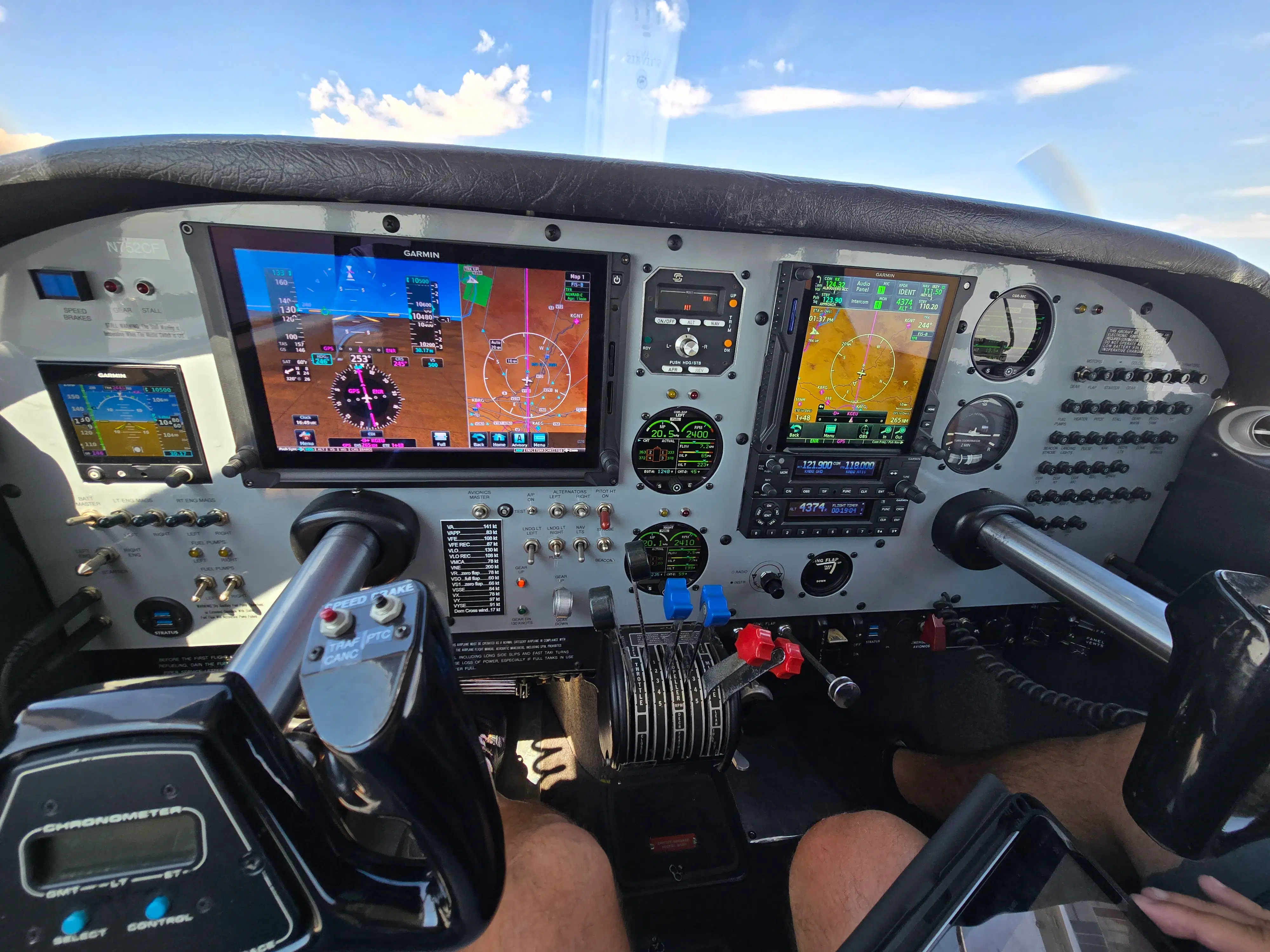
JEFF: "First hack: stop thinking about numbers and start thinking about colors. If you’re training in a modern cockpit like our G1000-equipped PA-30, use that visual tape to your advantage.
In the Twin Comanche, you’ve got two colors that should be burned into your retinas: Red and Blue.
The Red Line (Vmc) is 90 MPH.
The Blue Line (Vyse) is 105 MPH.
Don't just memorize '90' and '105'. Look at where they sit relative to each other on the tape. When you’re flying, your brain processes spatial position faster than digits. On your checkride, when the examiner asks for Vmc, I want you to see that red line at the bottom of the tape. That’s your limit. That’s your 'do not cross' zone."
Hack 2: "Blue is for Best" (The Vyse Mnemonic)
JEFF: "Vyse: the best rate of climb with a single engine inoperative. In the PA-30, that’s 105 MPH. The hack here is simple: Blue is for Best.
If you lose an engine, the Blue Line is your life raft. It’s the speed that gives you the most altitude gain over time when you're down to one fan. Most pilots panic and pull back on the yoke to try and climb, but if you drop below that 105 MPH blue line, you’re actually hurting your performance. Nail the blue line, stay on the blue line. It’s the ‘Best’ place to be when things go south."
Hack 3: Respect the Red (Vmc is a Limit, Not a Target)

JEFF: "Hack number three involves the most misunderstood speed in aviation: Vmc. In our PA-30, Vmc: the Red Line: is 90 MPH.
Here’s the pro pilot authority secret: Vmc is a limit, not a target. I see students all the time trying to fly as close to 90 MPH as possible during engine-out drills. Why? You’re flirting with a loss of directional control.
Think of the Red Line as the edge of a cliff. You don't walk along the edge of a cliff to see how close you can get; you stay as far back as possible while still making progress. If you’re below 90 MPH with the critical engine out and the other at full power, you’re no longer a pilot: you’re a passenger. Respect the red."
Hack 4: The 15 MPH Safety Buffer
JEFF: "Look at the gap between our numbers. Vmc is 90. Vyse is 105. That’s a 15 MPH difference.
The hack? Memorize that 15 MPH buffer. On your Commercial Multi-Engine checkride, the ACS (Airman Certification Standards) requires you to maintain specific speeds within tight tolerances. If you know that 105 is your goal and 90 is your 'danger zone,' you mentally build a 15-mile-per-hour 'performance window.' This helps you stay ahead of the airplane instead of reacting to it."
Hack 5: Use Animated Training, Not Static Text
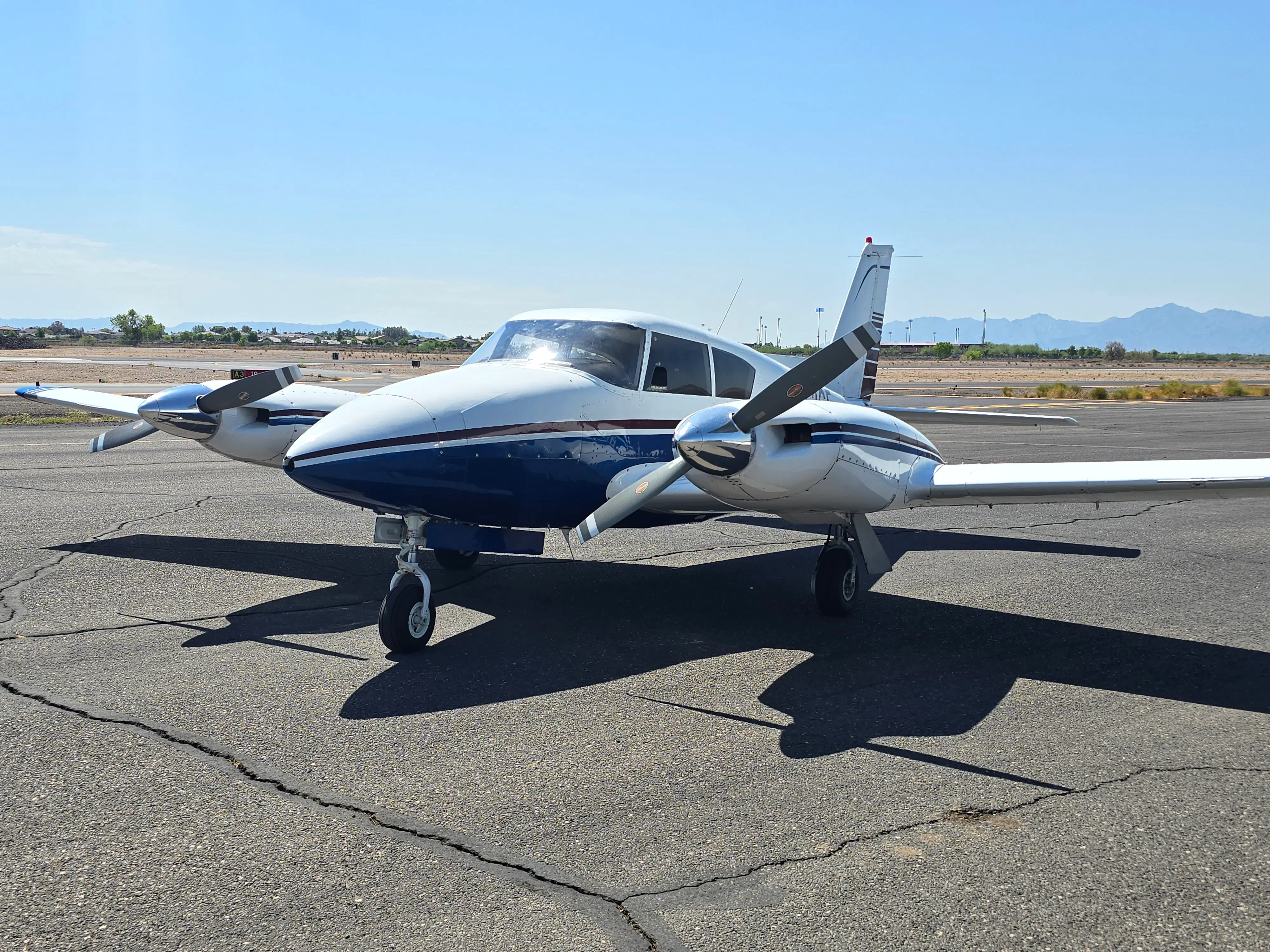
JEFF: "This is the biggest hack for the modern age. Why are you still reading a book from 1974? At Ace Pilot Academy, we use animated online training.
When you see a 3D animation of a Twin Comanche losing an engine, yawing toward the dead engine, and the airspeed tape dropping toward 90 MPH, it clicks in a way a paragraph never will. We built our courses on official FAA publications, but we made them engaging. If you want to master V-speeds in half the time, you need to see them in motion. That’s how you build a mental model that stays with you when the cockpit starts shaking."
Hack 6: The "Power-Yaw-Speed" Association
JEFF: "Hack six is a physical association. Every V-speed has a physical consequence.
At 105 MPH (Blue Line): The airplane feels stable. You have enough airflow over the rudder to maintain control and a bit of climb.
Approaching 90 MPH (Red Line): The rudder starts to feel 'mushy.' The airplane wants to roll and yaw aggressively.
Don't just watch the gauge. Feel the pressure in your legs. If you’re pushing full rudder and the nose is still moving, check your speed: you’re likely approaching that 90 MPH Vmc. Connecting the physical sensation to the number on the dial is how you transition from a student to a pro pilot."
Hack 7: The "What-If" Game
JEFF: "The final hack is a mental drill I used as a DPE to see if a candidate really knew their stuff. While you’re straight and level, ask yourself: 'If the left engine quits right now, what is my first number?'
In the PA-30, the answer should be immediate: 'Pitch for 105.'
If you have to think about it, you haven't mastered it. Practice these 'what-if' scenarios during every phase of flight: takeoff, climb, and approach. By the time you get to your checkride, the 105 MPH Blue Line and 90 MPH Red Line will be muscle memory."
[The Outro: Level Up Your Career]
(Camera: Jeff standing in front of the PA-30 on the ramp. The sun is setting, giving a professional, aspirational look.)
JEFF: "Mastering V-speeds is the foundation of multi-engine flying. It’s what separates the hobbyists from the career pilots. If you’re ready to stop wasting time on boring manuals and start flying with a pro-pilot mindset, come see us at Ace Pilot Academy.
We offer accelerated multi-engine programs in this exact PA-30. You’ll get 25 years of experience, a modern G1000 cockpit, and training that actually makes sense.
Head over to AcePilotAcademy.com to check out our online courses or book your time-building package. Don’t just study for the checkride: train for the career. I’m Jeff Gerencser, and I’ll see you in the cockpit."
(Fade to black with Ace Pilot Academy logo and website URL.)

Comments