
7 Mistakes You’re Making with Your Multi-Engine Add-On Checkride (and How to Fix Them)
- Jeff Gerencser
- Apr 9
- 5 min read

The multi-engine add-on is often described as the most "fun" rating a pilot can get. It’s fast-paced, powerful, and marks a major milestone for those on the career track. However, because many multi-engine flight training programs are "accelerated," candidates often walk into their checkride with a thin layer of proficiency that peels away under the pressure of a Designated Pilot Examiner (DPE).
According to the FAA Airman Certification Standards (ACS), a multi-engine rating isn't just about handling extra weight; it’s about managing the risk of asymmetrical thrust. If you’re preparing for your checkride, avoid these seven common pitfalls to ensure you leave the hangar with a new certificate in hand.
1. Losing the Airspeed Battle (The Vmc Threat)
The most common reason for failure during a multi-engine checkride is a loss of control during engine-out operations. In a twin-engine aircraft, airspeed is your primary safety margin. When an engine fails, the aircraft wants to yaw and roll toward the dead engine. If your airspeed drops below $V_{mc}$ (Minimum Controllable Airspeed), the rudder no longer has enough aerodynamic authority to counteract that yaw.
The Fix: Maintain or exceed $V_{yse}$ (Best Single-Engine Rate of Climb), often called "Blue Line," during all simulated engine-out operations. If you are performing a $V_{mc}$ demonstration and you reach the first sign of loss of directional control or a stall buffet, recover immediately. The ACS is clear: stalling with an engine failed is a one-way ticket to a "disapproved" notice.

2. Misidentifying the Inoperative Engine
It sounds simple in a classroom, but when the DPE pulls a throttle back at 3,000 feet, adrenaline kicks in. Pilots frequently misidentify which engine has "failed" and, in the worst-case scenario, attempt to feather the propeller on the good engine.
The Fix: Use the "Dead Foot, Dead Engine" rule religiously.
Identify: If you are pushing hard with your right foot to keep the ball centered, your left foot is "dead." Therefore, the left engine is the one that failed.
Verify: Retard the throttle of the suspected dead engine slightly to ensure there is no change in yaw.
Feather: Only after identifying and verifying should you simulate (or execute) the feathering procedure.
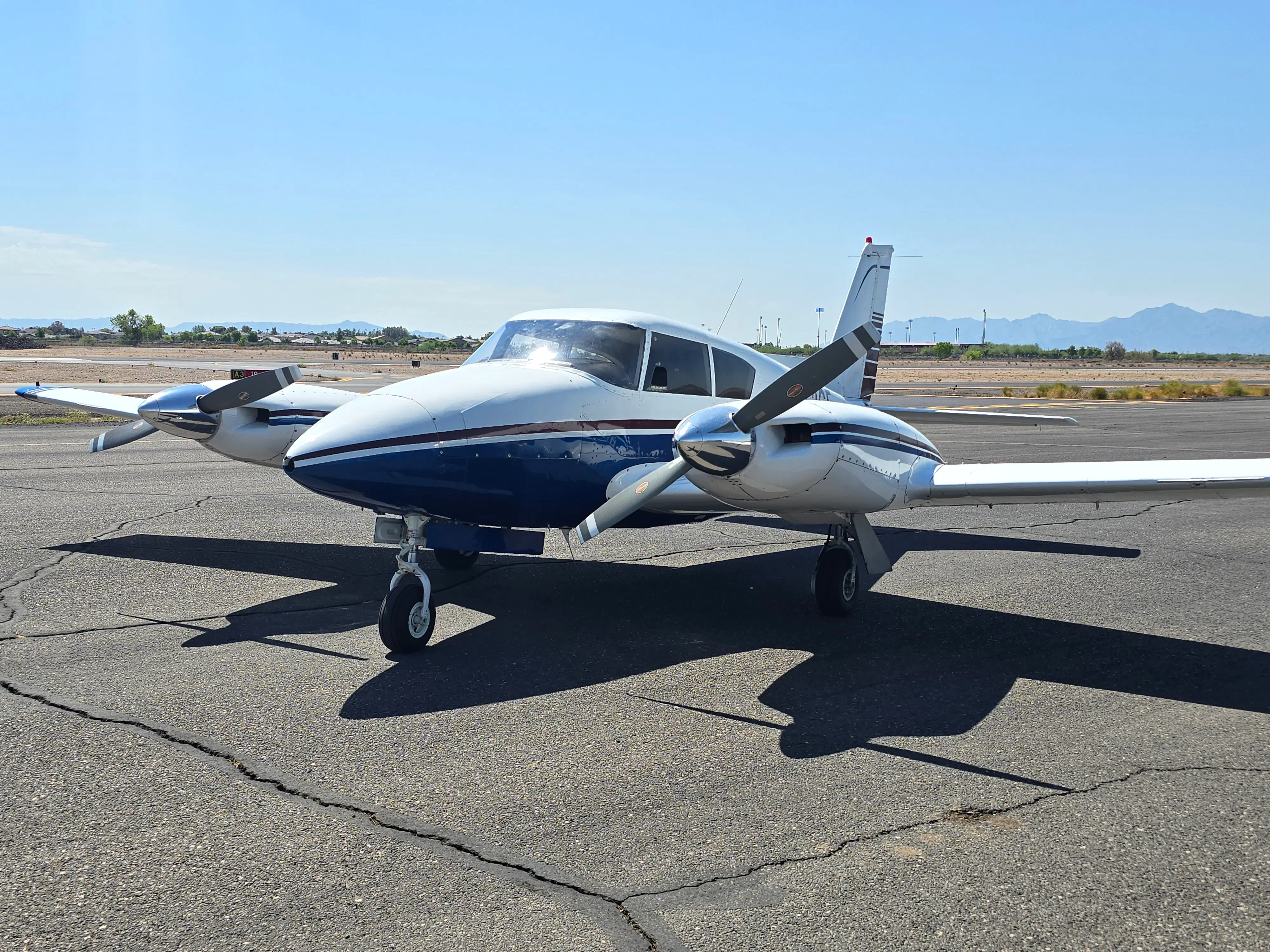
At Ace Pilot Academy, we train in the PA-30 Twin Comanche. It’s a responsive, honest airplane, but it rewards pilots who follow this disciplined identification sequence every single time.
3. Performing Maneuvers from a Script, Not Memory
A checkride is not an open-book test for emergency procedures. While the FAA encourages the use of checklists for normal operations (like pre-flight or cruise), emergency "bold face" items must be committed to memory. Some applicants attempt to read the engine-out flow from a checklist while the plane is descending at 500 fpm.
The Fix: Master your flows. You should be able to perform the "Engine Failure During Flight" flow: Mix, Props, Throttles, Flaps, Gear, Identify, Verify: blindfolded. Once the aircraft is stabilized and the immediate threat is managed, then pull out the checklist to verify you haven’t missed anything. This demonstrates to the DPE that you are a pilot-in-command, not just a reader-of-manuals.
4. Surface-Level Systems Knowledge
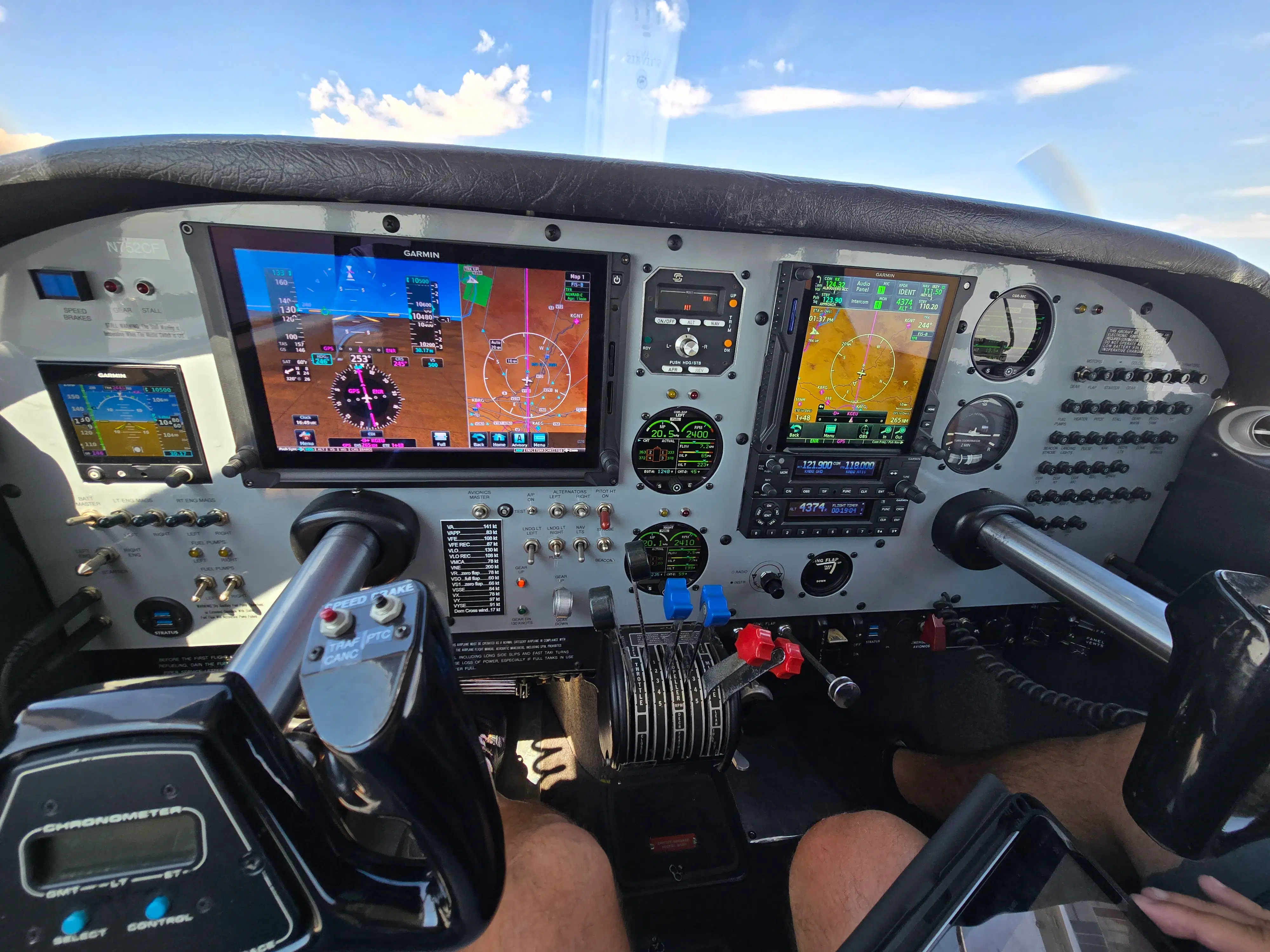
The "multi-engine oral" portion of the checkride is notorious for diving deep into aircraft systems. Many students can recite the "12 Factors of $V_{mc}$" but can't explain why an aft Center of Gravity (CG) decreases the rudder's effectiveness. If you can't explain the mechanics of the constant-speed, full-feathering propeller system on the PA-30, you aren’t ready.
The Fix: Go beyond the acronyms. Study the FAA Airplane Flying Handbook (AFH) Chapter 13. You should be able to draw the fuel system and explain how the nitrogen charge in the propeller hub helps move the blades to a high-pitch, feathered position. If the DPE asks how the landing gear is held in the "up" position, "magic" is not an acceptable answer.
5. Skipping the "Simple" Stuff
Checkride failures aren't always caused by catastrophic engine failures. Often, it’s the "private pilot" mistakes that catch multi-engine candidates off guard.
Forgetting to get ATIS before calling Ground.
Failing to check the "Gear Down" lights on short final.
Neglecting to clear the area before starting steep turns.
The Fix: Treat the Twin Comanche like a Cessna 172 for the basics. Use a "GUMP" check (Gas, Undercarriage, Mixture, Props) at every transition point: entering the downwind, crossing the FAF, and short final. The most expensive mistake you can make is a gear-up landing because you were too focused on the engine gauges.
6. Poor Communication During Engine Restarts
During the checkride, the DPE will likely have you demonstrate an in-flight engine shutdown and restart. A common mistake is rushing the restart or failing to communicate clearly with the examiner about the procedure. If you don't allow the engine to warm up properly before adding high power, you risk engine damage; if you don't follow the sequence, the engine might not fire at all.
The Fix: Talk through the process. "I am now checking that the fuel selector is on, the mixture is rich, and I am engaging the starter." Be patient with the restart. Ensure the oil pressure rises and the temperatures are in the green before you bring the engine back to a cruise power setting. This shows the DPE that you care about the aircraft's longevity.

7. Task Saturation During Instrument Work
For the Commercial Multi-Engine Add-On, you will be required to fly an instrument approach with one engine simulated inoperative. This is where many pilots fall apart. They lose track of their heading, skip the "Going Missed" briefing, or forget to start the timer at the Final Approach Fix (FAF).
The Fix: Simplify your workload.
Trim, Trim, Trim: If you are fighting the airplane, you can't fly a precise approach.
Stay Ahead: Have your frequencies tuned and your approach plate briefed long before you reach the IAF.
Announce Intentions: If you are "going missed," say it out loud. "Cram, Clean, Cool, Call": Power up, Flaps/Gear up, Cowl flaps as needed, and talk to ATC.
Summary: The Path to Success
The multi-engine checkride is a test of your ability to remain calm when the "easy" flying stops. By mastering your $V$-speeds, refining your flows, and respecting the systems of the aircraft, you turn a high-pressure evaluation into a routine demonstration of skill.
If you’re looking to sharpen these skills before your big day, check out our Multi-Engine Flight Training Course. We focus on the practical, real-world application of these maneuvers so that the checkride feels like just another day in the cockpit.
Coming Up Next: Tomorrow, we wrap up Multi-Engine Mastery Week with a deep dive into Prepping for your Commercial Multi-Engine Add-On Checkride, focusing on the specific ACS standards that DPEs are looking for in today's training environment. Don't miss it!

Comments