
The Ultimate Guide to Your Commercial Multi-Engine Add-On: Everything You Need to Succeed
- Jeff Gerencser
- Apr 21
- 5 min read

For career-track aviators, the Commercial Multi-Engine (CME) Add-on is more than just a rating; it is the gateway to the airlines, corporate flight departments, and high-performance charter operations. Most pilots follow the traditional path: earning a Commercial Single-Engine Land (CSEL) certificate first, then "adding on" multi-engine privileges.
This guide breaks down the transition from one engine to two. As part of our Multi-Engine Mastery Week, we are focusing on the technical, aerodynamic, and practical requirements you need to master to pass your checkride and excel in a multi-engine cockpit.
The Regulatory Roadmap: FAA Requirements
Adding a multi-engine rating to an existing commercial certificate is governed by 14 CFR § 61.63(c). Because you already hold a commercial certificate, the process is streamlined. You do not need to take an additional FAA knowledge test (written exam), provided you already hold a powered aircraft rating at the commercial level.
Training Minimums vs. Practical Reality
While the FAA does not mandate a specific number of flight hours for an add-on rating (unlike the 250 hours required for the initial commercial certificate), you must be proficient in the areas of operation listed in the Airman Certification Standards (ACS).
On average, most pilots require:
7 to 10 hours of dual flight instruction.
5 to 10 hours of dedicated ground school.
A focus on engine-out aerodynamics and emergency procedures.
The goal is not just to fly the airplane, but to manage the increased complexity of twin-engine systems and the critical performance penalties that occur when one engine fails.
Aerodynamics: The Physics of Asymmetric Thrust
In a single-engine aircraft, an engine failure results in a glider. In a multi-engine aircraft, an engine failure results in asymmetric thrust and drag, which creates a significant yawing and rolling moment toward the dead engine.
The Critical Engine
On most light twins, both propellers rotate clockwise (viewed from the cockpit). Due to P-factor, accelerated slipstream, and torque, the failure of the left engine is more detrimental to control than the failure of the right engine. This makes the left engine the Critical Engine.
Understanding this concept is fundamental to mastering Multi-Engine V-Speeds. You must be able to explain the "PAST" acronym (P-factor, Accelerated Slipstream, Spiraling Slipstream, and Torque) to a DPE during your oral exam.
V-Speeds You Must Know
$V_{mc}$ (Minimum Controllable Airspeed): The minimum speed at which directional control can be maintained with the critical engine inoperative.
$V_{yse}$ (Blue Line): Best rate of climb speed with a single engine.
$V_{sse}$ (Safe Single-Engine Speed): The minimum speed for intentional engine cuts during training to avoid a $V_{mc}$ roll.

Caption: A diagram illustrating the four factors that contribute to the Critical Engine: P-Factor, Accelerated Slipstream, Spiraling Slipstream, and Torque.
The Machine: Mastering the PA-30 Twin Comanche
At Ace Pilot Academy, we utilize the Piper PA-30 Twin Comanche for multi-engine training. As discussed in our Master the PA-30 Guide, this aircraft is widely considered one of the most efficient and "honest" multi-engine trainers ever built.
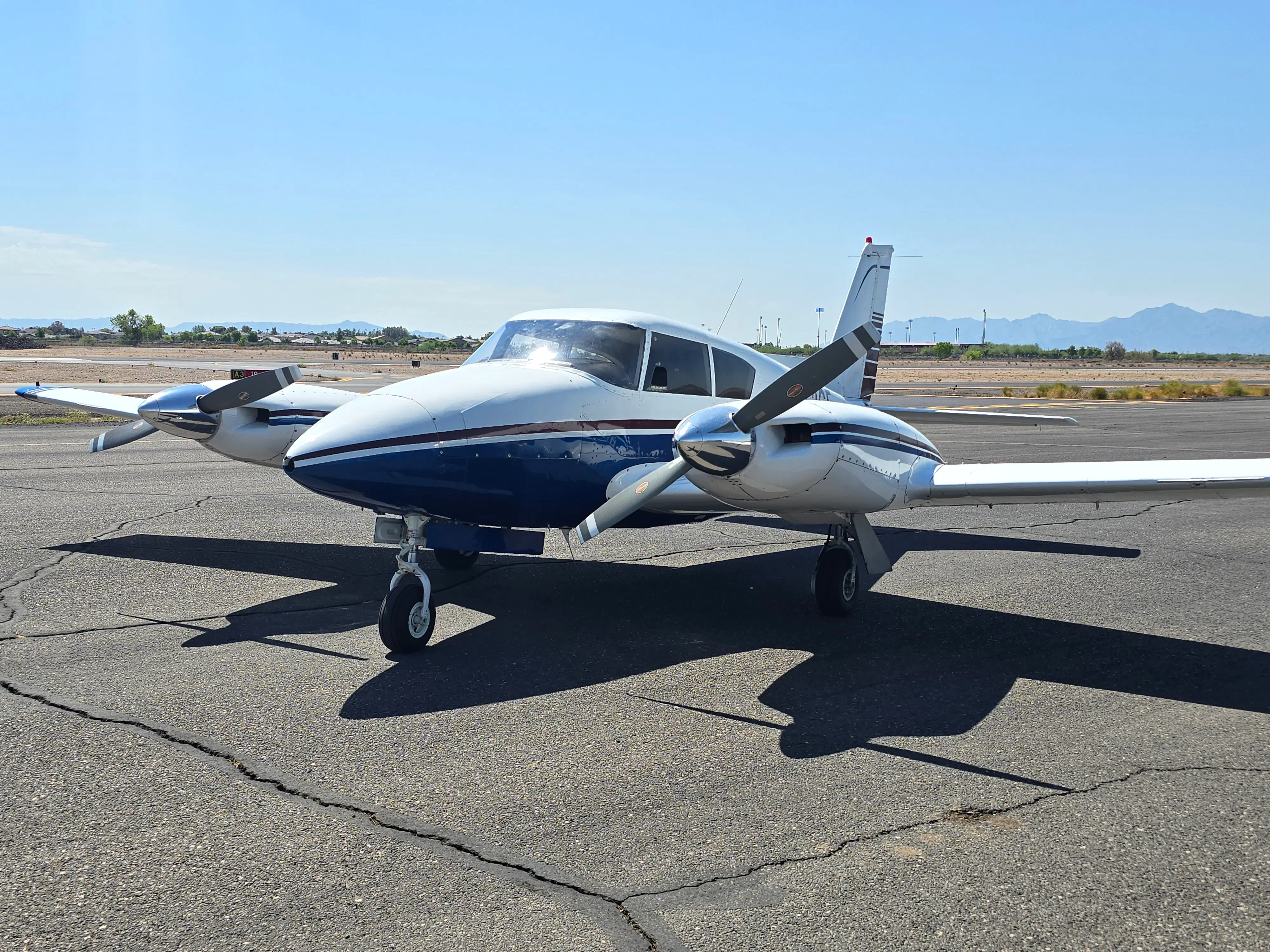
The PA-30 is a "high-performance" aircraft by definition, and its systems require precise management. Transitioning to the Twin Comanche involves learning:
Fuel Management: Managing the main and auxiliary tanks, and understanding the cross-feed system to balance the load during single-engine operations.
Propeller Systems: Learning how the constant-speed, full-feathering propellers work. You must understand how nitrogen pressure and large springs move the blades to the feather position when oil pressure is lost.
The Landing Gear: Mastering the electric gear system and the emergency extension procedures.
Core Flight Maneuvers for the CME Add-On
The checkride is a test of your ability to maintain control under duress. The FAA Airplane Flying Handbook (AFH) provides the blueprint for these maneuvers.
1. The $V_{mc}$ Demonstration
This is the "signature" maneuver of the multi-engine rating. You will intentionally slow the aircraft with the critical engine at idle and the operating engine at full power. You are looking for the "loss of directional control": the point where full rudder is no longer enough to stop the yaw.
Success Key: Recognize the symptoms early and recover by reducing power on the operating engine and pitching down.
2. Engine Failure During Takeoff Roll
This is a test of your "Go/No-Go" decision-making. Before the aircraft reaches $V_{mc}$, the examiner will pull a throttle to idle.
Action: Close both throttles immediately and apply maximum braking while maintaining directional control.
3. Engine Failure After Takeoff (Above $V_{yse}$)
This is the most critical phase of flight. You must execute the "Memory Items" flawlessly:
Control: Maintain heading and pitch for $V_{yse}$ (Blue Line).
Configuration: Flaps up, Gear up.
Checklist: Identify (Dead foot, dead engine), Verify (Retard the suspected throttle), and Fix or Feather.
4. Single-Engine Instrument Approach
If you hold an instrument rating, you must demonstrate the ability to fly an approach (often a non-precision or ILS) with one engine simulated inoperative. Managing the workload while staying on the localizer and glide path is the hallmark of a professional multi-engine pilot.
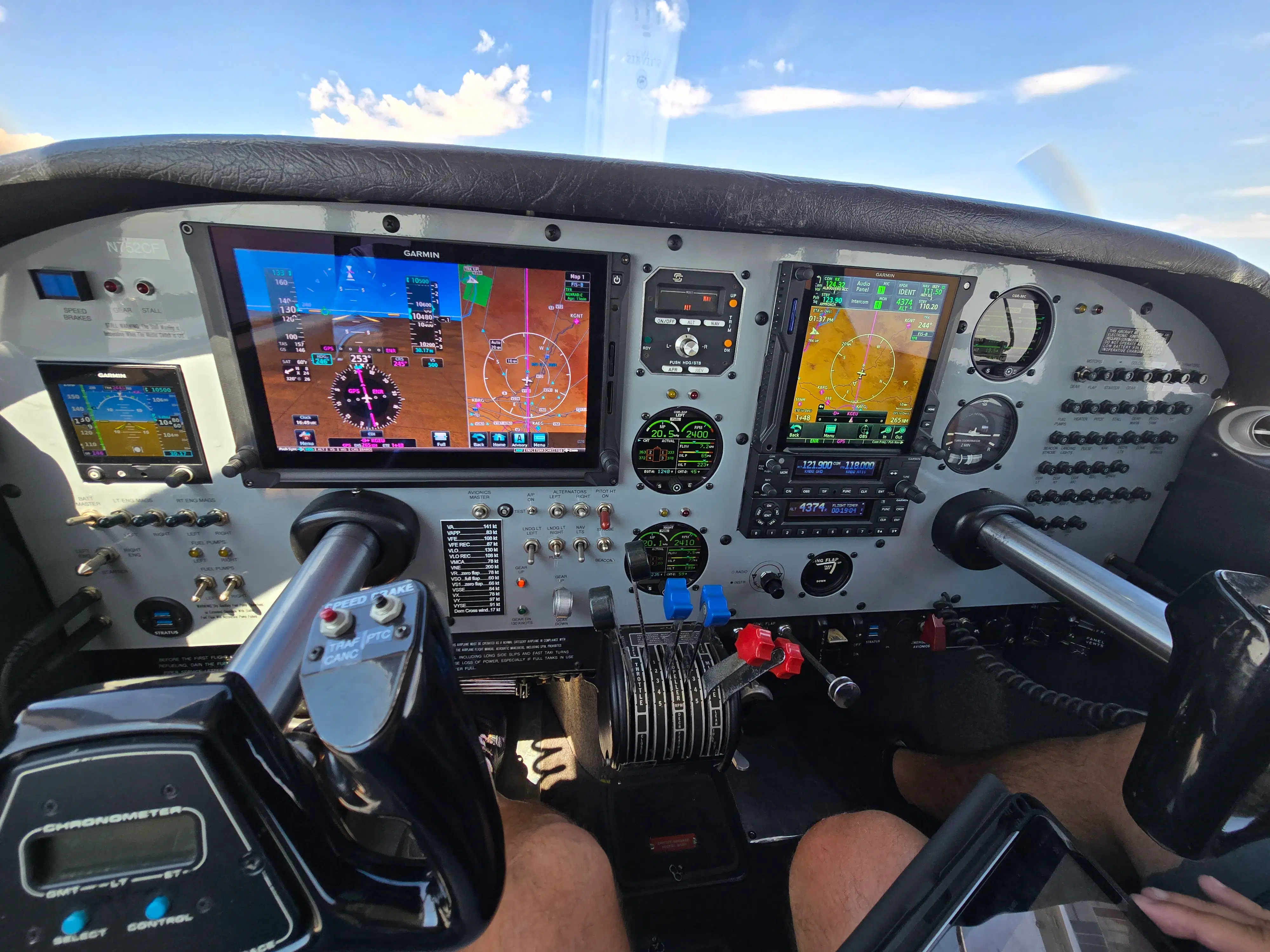
Advanced Systems Knowledge
To succeed at the commercial level, you need a deep understanding of multi-engine-specific systems.
Multi-Engine Propeller Systems
Unlike single-engine propellers, multi-engine props are designed to feather. This aligns the blades with the airflow to minimize drag. You must be able to explain the role of the anti-feathering pins and why an engine will not feather if it is shut down below a certain RPM (typically 800 RPM in the PA-30).
Combustion Heaters
Many light twins, including the Twin Comanche, use a Janitrol combustion heater. This is a separate unit located in the nose that burns fuel to provide cabin heat. As a commercial pilot, you must know the safety protocols for the combustion heater, including the cooling period required before shutting it down on the ground to prevent the over-temperature switch from tripping.

Caption: A technical cutaway of a constant-speed, full-feathering propeller hub showing the pitch change mechanism.
Performance and Limitations
A commercial pilot must be a master of the Pilot’s Operating Handbook (POH). You need to calculate performance for every flight, especially regarding the "Single-Engine Service Ceiling."
Service Ceiling: The altitude where the aircraft can maintain a 100 fpm climb with both engines at max continuous power.
Single-Engine Service Ceiling: The altitude where the climb rate drops to 50 fpm with one engine feathered.
Absolute Ceiling: The altitude where climb is no longer possible.
If your density altitude is higher than your single-engine service ceiling, an engine failure means you are in a "drift-down" scenario. You aren't going to hold altitude; you are simply managing your descent to the most suitable landing site.
Preparing for the Checkride
The Commercial Multi-Engine Add-on checkride is often shorter than the initial commercial, but the intensity is higher. The DPE is looking for "Commercial Pilot Standards." This means:
Smoothness: No erratic control inputs during engine failures.
Coordination: Maintaining "half-ball" displacement or a 2-3 degree bank into the operative engine to minimize drag (Zero Side Slip).
Decision Making: Knowing when to feather and when to attempt a restart.
Review our Friday guide on Prepping for your Multi-Engine Checkride for a complete checklist of documents and aircraft maintenance logs you’ll need to present.
Career Impact: The "Time Building" Phase
Once you have the CME Add-on, your focus shifts to Multi-Engine Time Building. Most regional airlines and high-tier charter operators require a minimum of 25 to 50 hours of multi-engine time, with many looking for 100+ hours.
Earning this rating is the single biggest "level up" in your aviation career. It moves you away from the training environment and into the realm of professional, heavy-iron operations.
Whether you are looking for an accelerated flight training program or a steady transition, the Commercial Multi-Engine Add-on is a challenge worth the effort. Focus on the aerodynamics, respect the $V$-speeds, and fly the airplane all the way to the tie-downs.
Success in multi-engine flying isn't about having two engines; it’s about being prepared to fly when you only have one.

Comments