
7 Mistakes You’re Making with Your Multi-Engine Add-On (And How to Fix Them)

Getting your multi-engine rating is a major milestone for any pilot. Whether you are aiming for a career at the airlines or just want the speed and redundancy of a twin, the transition from single-engine aircraft to something like our PA-30 Twin Comanche is a significant jump in complexity.
Many pilots approach the multi-engine add-on with a "it’s just another rating" mindset. This is a mistake. The physics change, the workload doubles, and the consequences of a mistake are far more immediate. To help you breeze through your checkride and stay safe in the flight deck, we’ve identified seven common mistakes pilots make during multi-engine training and exactly how to fix them.
1. Misidentifying the Failed Engine
In a single-engine airplane, if the engine fails, you know it. In a twin, it isn’t always immediately obvious: especially at high power settings where the aircraft might just start a slow, deceptive yaw. A common mistake is reacting too quickly based on a visual cue rather than a physical one.
The Fix: "Dead Foot, Dead Engine." Do not look at the engine gauges first. Use your feet. If you are pushing the right rudder to keep the nose straight, your left foot is doing nothing ("dead"). That means your left engine is the one that has failed. Use the physical feedback of the aircraft to identify the failure before you even touch a lever.
2. Rushing the Verification Process
Once you think you’ve identified the failed engine, the instinct to "fix it" often leads to rushing. We see students pull the wrong throttle or, worse, feather the wrong propeller. If you feather your only remaining good engine, you have turned your twin-engine aircraft into a very heavy glider.
The Fix: The "Identify, Verify, Feather" Flow. Follow the FAA Airplane Flying Handbook (AFH) standards:
Identify: "Dead foot, dead engine."
Verify: Retard the throttle of the suspected dead engine slowly. If nothing changes in the aircraft’s performance or yaw, you’ve got the right one.
Feather: Only after verification do you move the prop lever to the feather position.
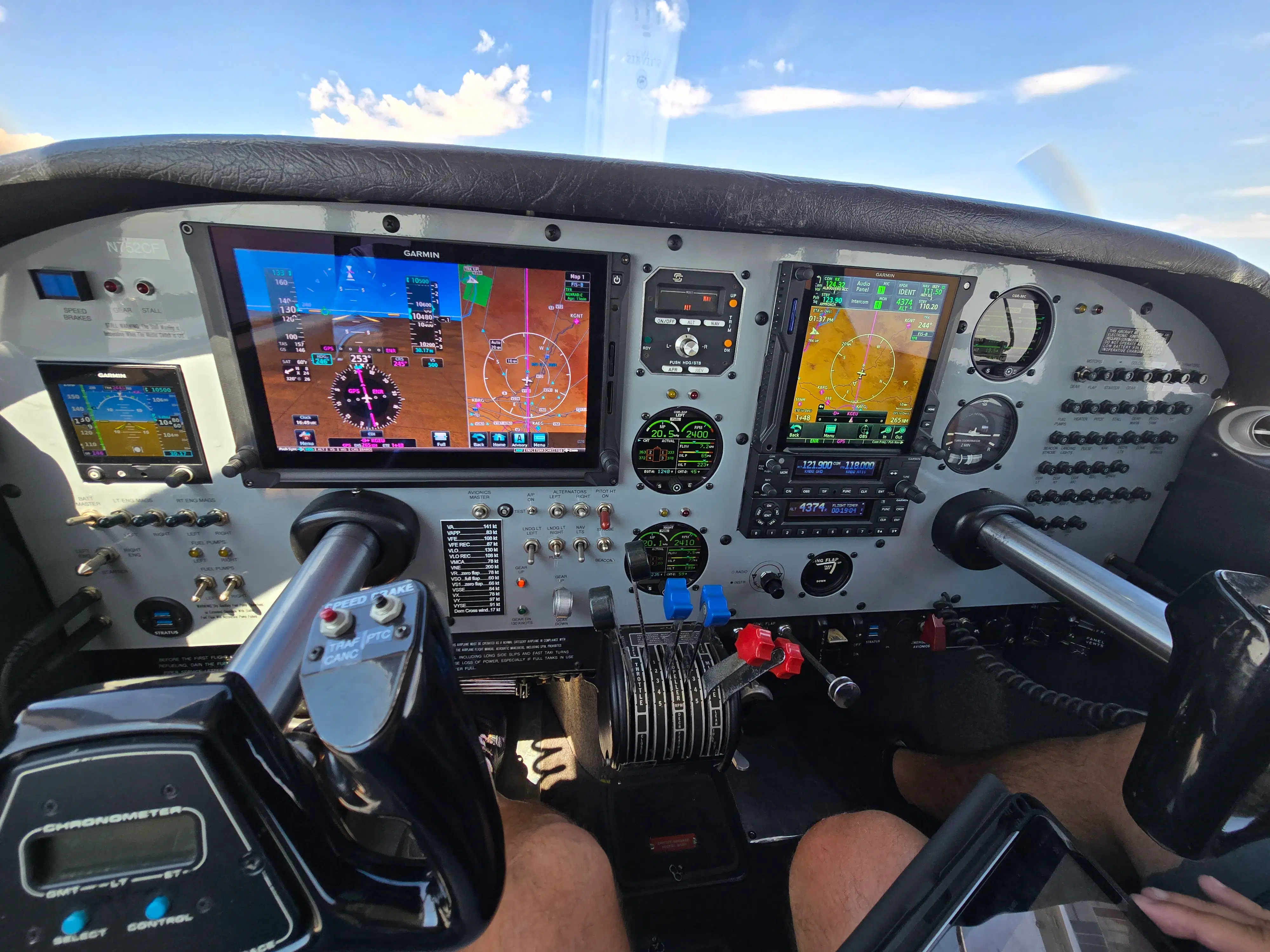
3. Ignoring the "Red Line" (Vmc Awareness)
Minimum Controllable Airspeed (Vmc) is the most critical number in your multi-engine vocabulary. Many students treat Vmc as a theoretical number on the airspeed indicator rather than a hard physical limit. If you lose an engine and drop below Vmc, the rudder is no longer powerful enough to stop the aircraft from rolling toward the dead engine.
The Fix: Respect the Red Line. During your multi-engine flight training, practice Vmc demonstrations religiously. Understand that Vmc is not a fixed number; it changes based on weight, CG, and flap settings. Always keep your speed above the "Blue Line" (Vyse) during the climb to ensure you have a margin of safety. If the aircraft begins to lose directional control, reduce power on the operating engine immediately to regain control: even if it means losing altitude.
4. Failing to Master the Aerodynamics (P.A.S.T.)
Multi-engine aerodynamics are more complex than "left turns and right turns." To pass your Commercial Multi-Engine Add-On checkride, you must understand why one engine is "critical." Many pilots struggle to explain the four factors that make the left engine critical on most American twins.
The Fix: Memorize and Visualize P.A.S.T. Understand how these four factors affect controllability:
P-Factor: The descending blade on the right engine has a longer arm from the CG, creating more asymmetric thrust.
Accelerated Slipstream: Lift is increased behind the operating engine; losing the left engine creates a larger rolling moment.
Spiraling Slipstream: The slipstream from the left engine hits the tail, helping with directional control. If the left engine dies, that help vanishes.
Torque: The aircraft wants to roll opposite the propeller rotation.

5. Poor Engine Failure Simulation Management
In training, instructors often simulate failures by pulling a throttle to idle. A common mistake is for students to get "lazy" with the simulator. They know the engine isn't actually dead, so they don't treat the emergency with the required urgency or precision. Conversely, some instructors use fuel cutoff or mixture, which can lead to actual engine damage if not handled correctly.
The Fix: Treat Every Simulation as a Real Emergency. When your instructor pulls that throttle, go through the full flow. If you are training for your Commercial Multi-Engine Add-On, precision is key. Maintain your altitude within ACS standards and nail your headings. Use the "Zero Thrust" setting (usually a specific RPM/Manifold pressure combination) to simulate a feathered prop if the engine is actually running at idle.
6. Blindly Reaching for Controls (Switch Confusion)
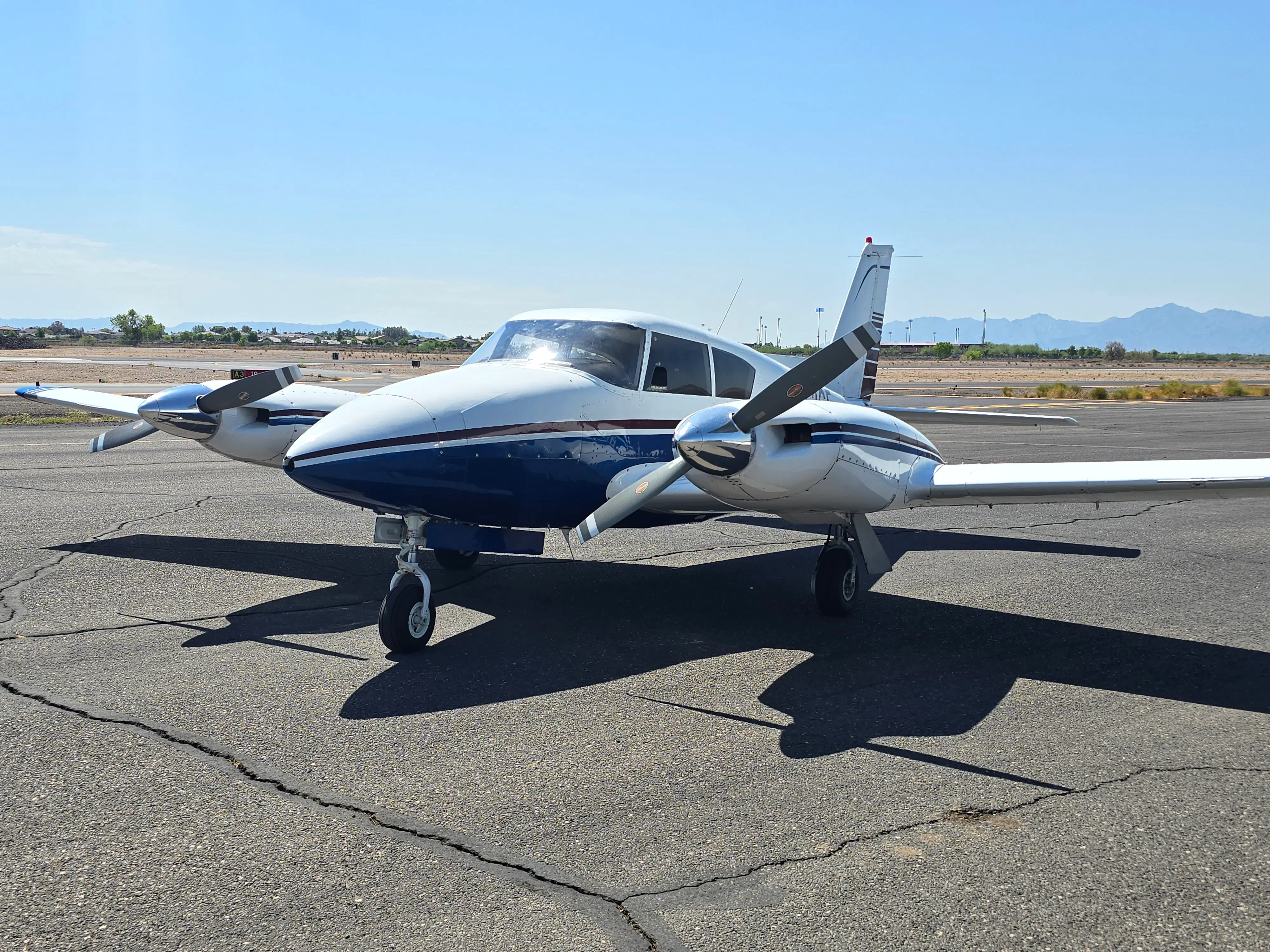
The cockpit of a Twin Comanche is more crowded than a Cessna 172. We see students reach for the fuel pump and accidentally flip a magneto switch, or grab the gear lever when they meant to grab the flaps. In a multi-engine environment, a "blind reach" can lead to catastrophic results.
The Fix: Look, Touch, Call, Activate. Develop a "point and call" system. Before moving a switch or lever:
Look at the control.
Touch it (without moving it).
Call out what it is (e.g., "Gear up").
Activate the control. This half-second pause prevents the majority of gear-up landings and accidental engine shutdowns.
7. Overestimating Single-Engine Performance
The biggest myth in aviation is that a twin-engine plane can fly just fine on one engine. In reality, losing an engine results in an 80-90% loss of climb performance. If you are heavy, hot, and high, the remaining engine might only be enough to "slow the descent" to the crash site.
The Fix: Know Your Performance Numbers. Before every flight, calculate your Single-Engine Service Ceiling and your Single-Engine Rate of Climb. If you lose an engine shortly after takeoff and the aircraft cannot climb, your only option is to land straight ahead. Do not try to "stretch" a climb that the physics of the aircraft won't allow. Refer to the Airman Certification Standards (ACS) for the specific performance expectations of your aircraft.
Mastery Starts with Preparation
The multi-engine add-on is one of the most rewarding ratings you can earn. It opens the door to high-performance flying and professional pilot careers. However, it demands a higher level of discipline and a deeper understanding of aerodynamics than your previous ratings.
If you’re ready to take the next step in your career, check out our multi-engine training resources or contact us to schedule time in the PA-30.

Mastering the Multi-Engine Mastery Week Series:
Mon: Multi Engine V-Speeds Explained.
Tue: Master the PA-30 Twin Comanche: A Pilot's Guide.
Wed: Accelerated Flight Training: Is It Right for You?
Thu: Multi-Engine Time Building: Tips for Your Career.
Fri: Prepping for your Commercial Multi-Engine Add-On Checkride.
Stay sharp, keep the blue side up, and remember: in a twin, your feet are just as important as your hands. See you in the cockpit.

Comments