
7 Mistakes You’re Making with Your Commercial Multi-Engine Add-On Prep
- Jeff Gerencser
- Apr 8
- 5 min read

Getting your Commercial Multi-Engine Add-On is one of the most exciting milestones in a pilot’s career. It’s the transition from single-engine light aircraft to the complex, high-performance world of professional aviation. However, many pilots approach this rating with a "check-the-box" mentality, treating it as just another short course.
At Ace Pilot Academy, we see pilots struggle not because they lack skill, but because they carry over habits from single-engine flying that don't apply here. If you want to breeze through your checkride and actually be a safe multi-engine pilot, you need to avoid these seven common pitfalls.
1. Focusing on the Wrong Material
By the time you reach the Multi-Engine Add-On, you are likely already a Commercial Pilot. The examiner knows you can fly a rectangular pattern and talk to ATC. They aren't there to re-test your private pilot knowledge; they are there to see if you can handle the complexities of two engines.
Too many students waste hours reviewing basic aerodynamics or weather theory they already mastered. Instead, your focus must shift entirely to multi-engine specifics: asymmetric thrust, V-speeds unique to twins, and complex systems. Use the Airman Certification Standards (ACS) as your roadmap. If it isn't in the Multi-Engine Add-On section, deprioritize it until you’ve mastered the twin-specific tasks.
2. Treating Systems Knowledge as a "Surface-Level" Requirement
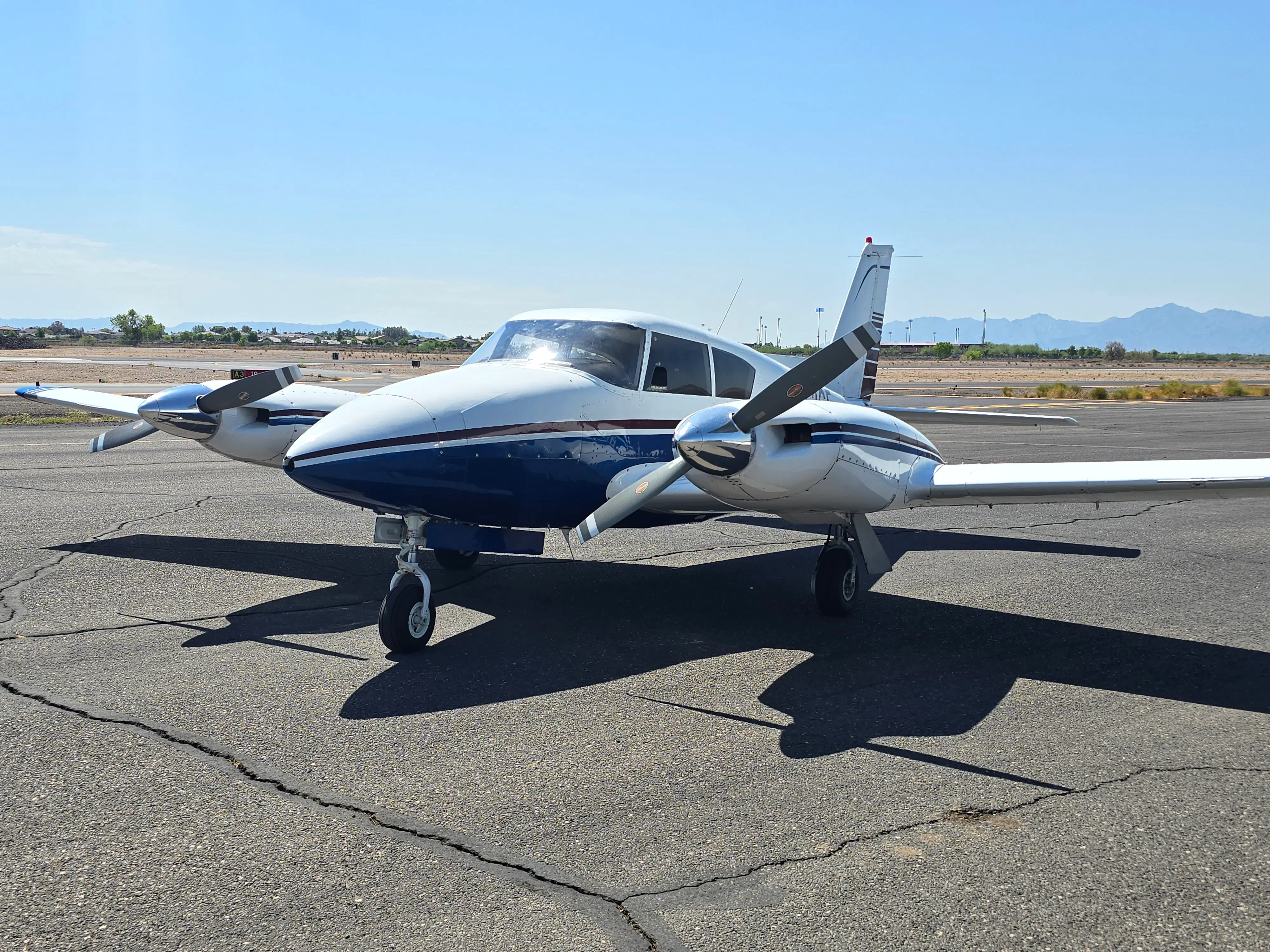
In a Cessna 172, the "system" is often as simple as a gravity-fed fuel line and a fixed-pitch prop. In a twin like our PA-30 Twin Comanche, the systems are significantly more involved. You aren't just managing two engines; you’re managing the interaction between them.
Mistakes often happen because pilots don't understand the "why" behind the hardware. You need to be able to explain:
Propeller Systems: How do nitrogen charges, oil pressure, and aerodynamic twisting moments interact to feather the prop?
Fuel Cross-feed: Can you visualize the multi-engine fuel x-feed systems in your sleep?
Heaters and Environmental: How does the multi-engine combustion heater work, and what are the safety risks?
If you can't draw the system on a whiteboard, you don't know it well enough for a commercial-level checkride.
3. Hesitating on Critical V-Speeds
In a single-engine airplane, an engine failure is a glide. In a multi-engine airplane, an engine failure is a performance and control emergency. There is no time to consult a checklist when you lose an engine at 400 feet AGL.
You must have your multi-engine V-speeds memorized and understood. Specifically:
Vmc (Minimum Controllable Airspeed): The speed below which you lose directional control.
Vyse (Best Rate of Climb OEI): Often referred to as "Blue Line."
Vsse (Intentional One-Engine Inoperative Speed): The "safe" speed for training engine failures.
Knowing the numbers is only half the battle. You must understand how multi-engine performance and limitations change based on density altitude and weight. If you hesitate for three seconds to remember Blue Line during a simulated failure, you’ve already lost significant altitude.
4. Sloppy Engine-Out Muscle Memory
The Commercial Multi-Engine checkride is won or lost during the engine failure procedures. Examiners are looking for a calm, disciplined, and automatic response.
A common mistake is having a "hazy" flow. Your hands should move to the controls before your brain even finishes processing the "bang." The standard flow: Control, Power, Drag, Identify, Verify, Feather/Fix: must be drilled into muscle memory.
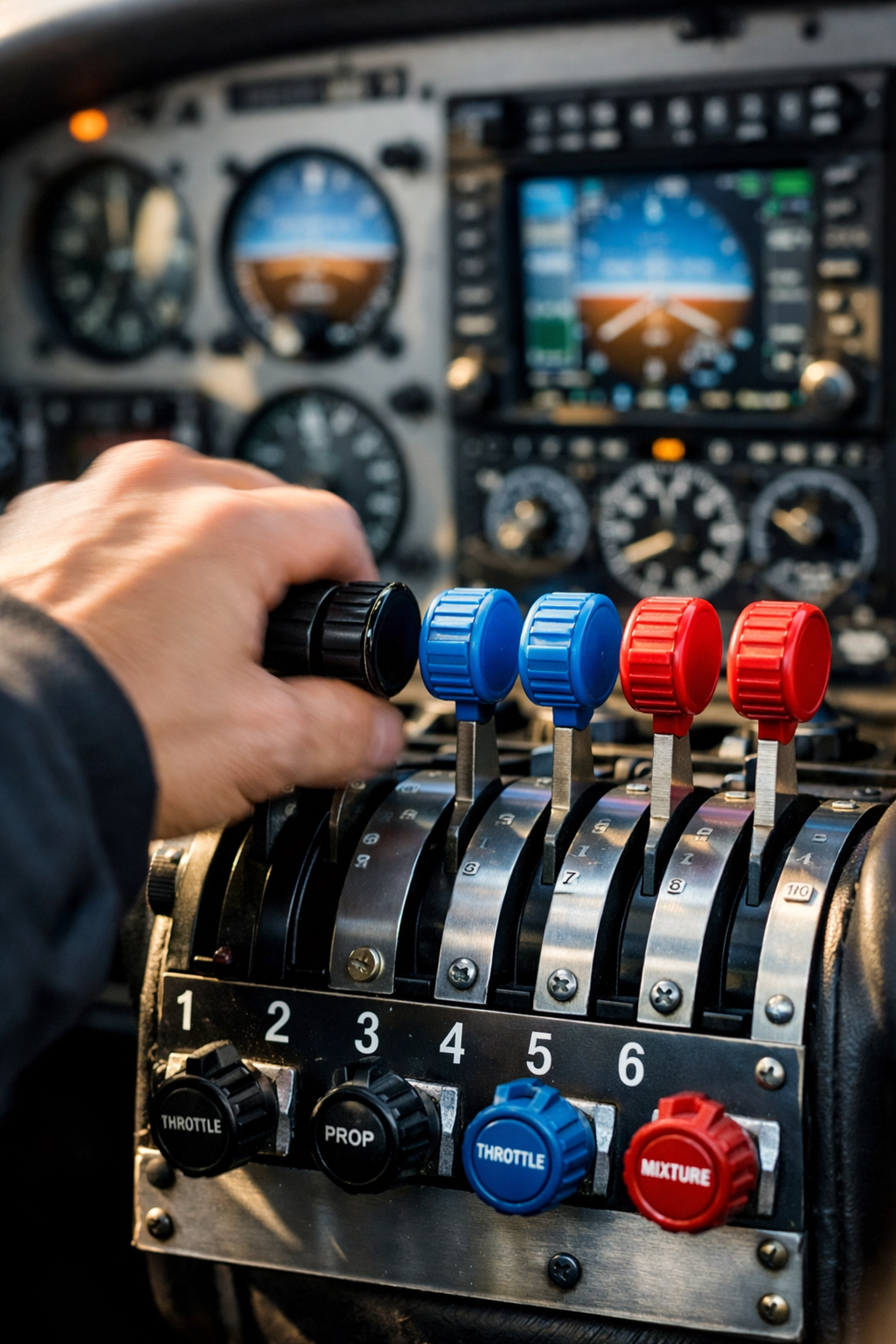
When the instructor or examiner pulls a throttle:
Control: Maintain heading and pitch (Blue Line).
Power: Mixture, Props, Throttles forward.
Drag: Flaps up, Gear up.
Identify: "Dead foot, dead engine."
Verify: Retard the throttle of the suspected dead engine.
Action: Feather or attempt a restart depending on altitude.
If you are hunting for levers or looking down at the floor, you aren't ready for the checkride.
5. Rushing the Identification (The "Wrong Engine" Disaster)
The most dangerous mistake a multi-engine pilot can make is feathering the wrong engine. In a real-world scenario, this turns a manageable emergency into a dual-engine glider with very poor glide characteristics. On a checkride, it is an immediate failure.
The "Dead Foot, Dead Engine" rule is your best friend. If you are pushing right rudder to maintain heading, your left foot is "dead" (doing nothing), which means your left engine is the one that failed.
The mistake pilots make is rushing this step due to adrenaline. Identify by verbalizing "Left foot dead, left engine failed," then Verify by slowly retarding the left throttle to see if anything changes. If the aircraft remains controllable, you’ve verified correctly. Only then do you move to the feathering step.
6. Misunderstanding Vmc as a Static Number
Many students treat Vmc (the red line on the airspeed indicator) as a fixed number. In reality, Vmc is highly dynamic. It is a calculated speed based on very specific conditions (the "COMBATS" acronym: Critical engine windmilling, Operating engine at max power, Max gross weight, Bank up to 5 degrees, Aft-most CG, Takeoff configuration, Standard day).
If your CG moves aft, your Vmc increases. If you fail to maintain a zero side slip bank toward the operating engine, your Vmc increases.
Understanding the relationship between multi-engine Vmc and variables like critical density altitude is what separates a commercial pilot from a lucky one. The examiner will likely ask how Vmc changes if you are at a higher altitude or a lighter weight: make sure you have the answers ready.
7. Underestimating Training Time Requirements
The "Accelerated Multi-Engine" course is a popular way to get the rating, often advertised as a 3-to-4 day program. While it is entirely possible to meet the FAA requirements in that timeframe, many pilots underestimate the mental fatigue involved.
Technically, there is no minimum hour requirement for the add-on, other than the 3 hours of checkride prep within the preceding 2 calendar months. However, most pilots need 7 to 10 hours of flight time to reach the level of proficiency required by the ACS.
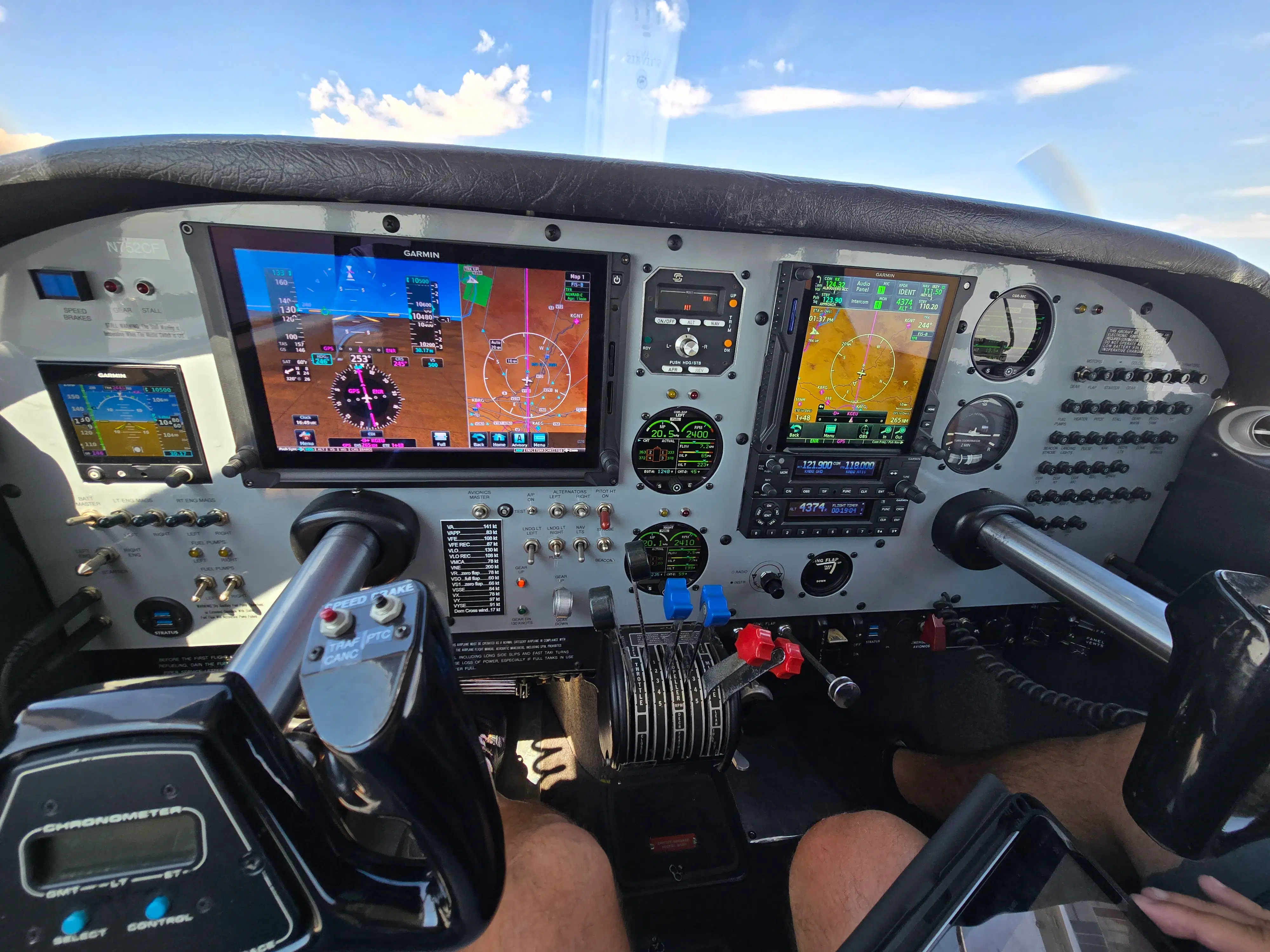
Trying to cram everything into a single weekend without prior ground study is a recipe for a "notice of disapproval." You should arrive at your flight school with the multi-engine propeller systems and forces acting on an aircraft already memorized. The aircraft is a classroom for maneuvers, not for reading the POH for the first time.
First Things First!
Success in the multi-engine world is about discipline and preparation. If you can avoid these seven mistakes, you’ll not only pass your checkride but also build the foundation for a safe career in larger, more complex aircraft.

Quick Prep Checklist:
Review the PA-30 POH: Know your airspeeds and emergency flows.
Study the ACS: Know exactly what the examiner is allowed to test.
Master the Vmc Demo: Understand the aerodynamic factors before you get in the cockpit.
Simulate the Flows: Practice your "Identify/Verify" flows in a chair (chair flying) until they are automatic.
Ready to take the next step in your career? Check out our Multi-Engine Training Series to dive deep into these topics and ensure you're fully prepared for the big day. Whether you're mastering the VA speeds or learning about aircraft pressurization systems, Ace Pilot Academy has the resources to help you reach the flight deck.

Comments